

The Spirit of Community in Delano is defined by the
Creativity, Resilience, and Community Investment of its people.
Railroad
Arrived 1868
The railroad was central to Delano’s founding and development. When the St. Paul & Pacific Railroad reached the Crow River in 1868, the new settlement grew around its station and depot and was soon named Delano in honor of railroad official F. R. Delano. The Railroad Line The railroad brought passengers, commerce, grain and new businesses, while its bridge across the Crow River and depot became important local landmarks. A new depot was built in 1885, and a new 270-foot railroad bridge followed in 1904, with the bridge undergoing extensive rebuilding in the 1940s. The Railroad Line The Railroad Line The line eventually became part of the Great Northern, Burlington Northern and, today, BNSF Railway. Although Delano’s depot was torn down in 1988, the railroad line and bridge remain enduring reminders of the transportation network that helped create and shape the community. The Railroad Line The Railroad Line
In 1867, the First Division of the St. Paul & Pacific Railroad built 15 miles of line between Minneapolis and Wayzata. The main line was completed and in operation as far as Crow River, October 8, 1868. The post office, established a few weeks later, took the same name. The settlement was called just “the station” or “the depot” for sometime and had been called before that “Eagleville” from the fact that eagle nest were found on the “Island.” Early in the administration of the second postmaster appointment, a meeting was held on the depot platform and it was decided to name the town after F. R. Delano – at that time an official on the railroad.
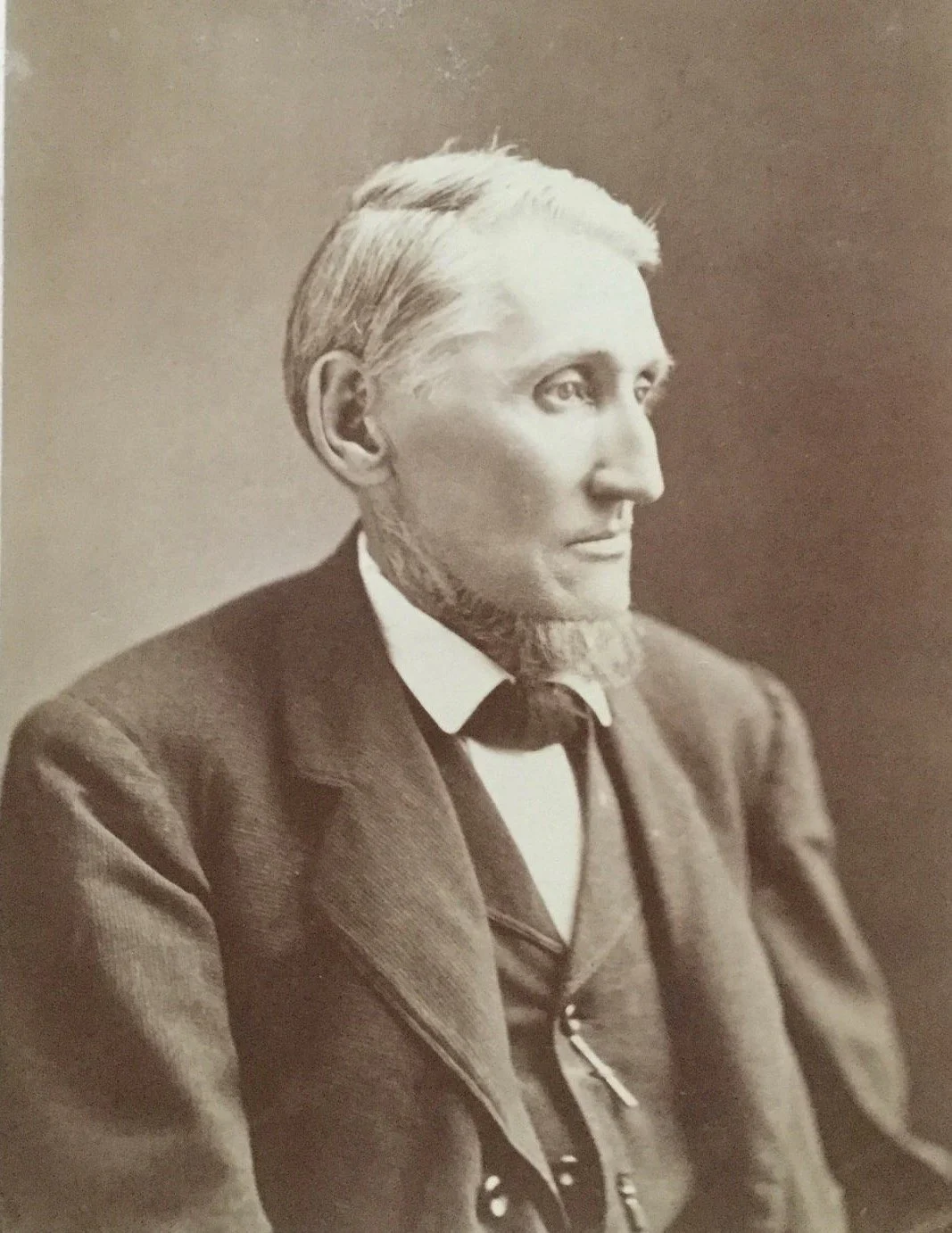
Mr. Delano had the reputation of being somewhat distant, and as we would say now “grouchy,” and Judge Fish, then a new lawyer, wrote an account of the “christening” for the Pioneer Press. After making a pretty good “story” out of the difficulty in finding a name not already in use, Mr. Fish wound up his article by saying that he thought this selection was safe and bowing to the nature of “the man,” there was “no probability of duplication.” The story was published as joke on Mr. Delano, who fully appreciated it.
By 1868, it was extended another 29 miles to Howard Lake.
October 26, 1868 – the formal opening of the St. Paul & Pacific Railroad to Crow River
“The St. Paul and Pacific Railroad was yesterday opened to Crow River, a point about thirty miles nearly due west from Minneapolis. The first regular train, in charge of conductor H. P. Breed, drawn by the engine Geo. L. Becker, left this city yesterday morning t 10:30, and reached Crow River at 12 o’clock. The officers of the road and a number of prominent gentlemen from Minneapolis and St. Paul, in addition to the regular passengers, took part in the formal opening. At Crow River a large number of people had assembled to witness the arrival of the first train, and as it neared the depot, gave vent to their feelings in loud and enthusiastic cheers. The Company have located the town upon the west bank of the Crow river, and it is certainly not only the most beautiful but the best location for a town west of Minneapolis. Although scarcely two weeks old, it boats of four stores, a hotel, black smith shop, butcher shop, carpenter shop and school house, besides the Railroad buildings, which consist to a large depot, 110 feet in length, a commodious engine house and tank house. The Company will soon build an elevator with a capacity of 40,000 bushels.
At the river the company have built a flume truss bridge 160 feet in length. Beyond the bridge the track is laid about a half a mile, and the track layers are laying at the rate of three quarters of a mile a day.”
(from the Star Tribune (Minneapolis, Minnesota) Tues., Oct. 27, 1868)
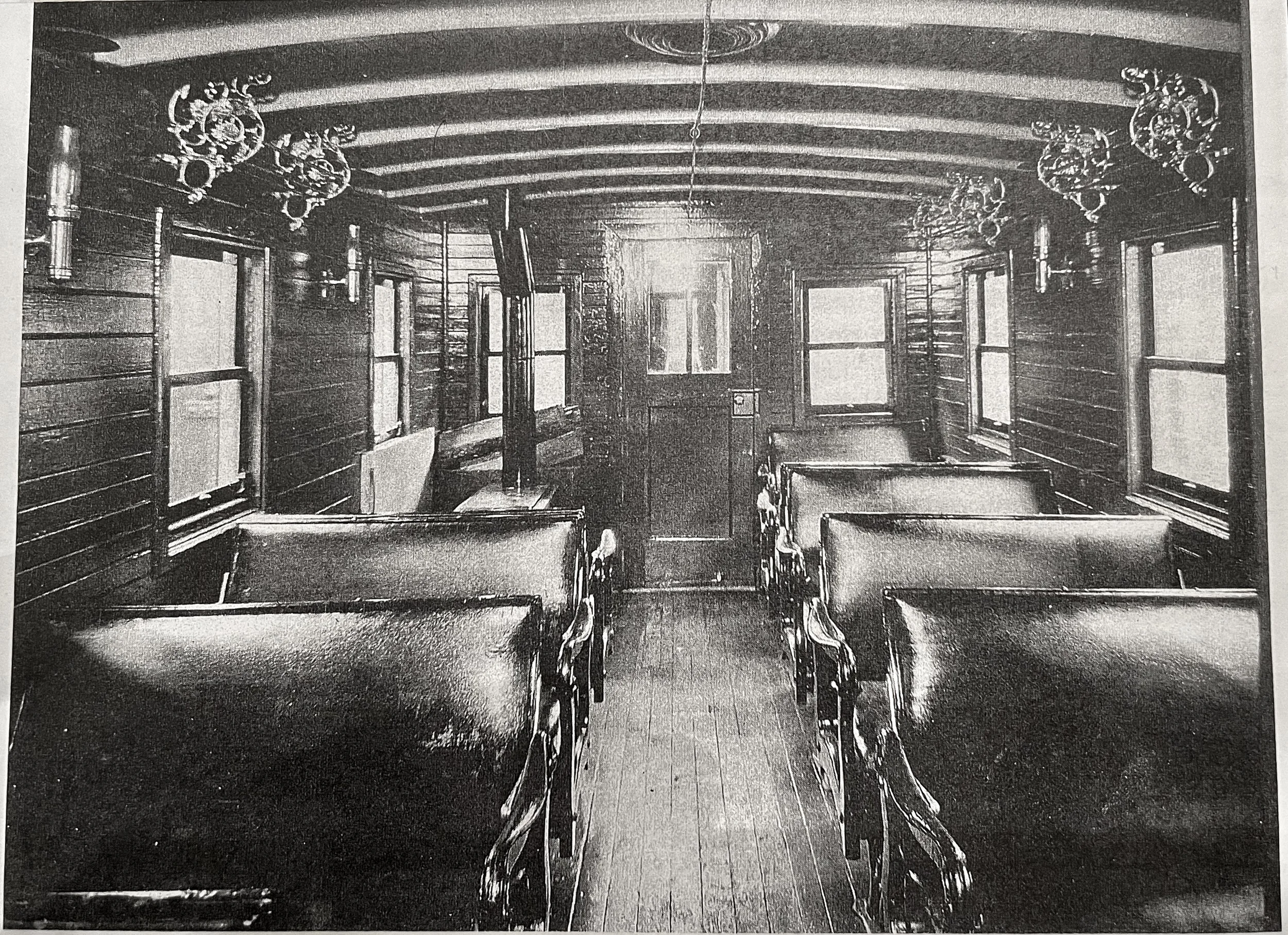
Two mixed passenger and freight trains made the round trip daily between St. Paul and Benson by 1870. A special passenger train, the Delano Accommodation, left Delano each morning for St. Paul, made a trip between St. Paul and Minneapolis at noon, and serving immediate stations, returned to Delano at day’s end.
(The Great Northern Railway: A History/ Part 1 1856 to 1916)
Inelegant but perfectly functional coaches were assigned to the Delano Accommodation. (Courtesy of Minnesota Historical Society)
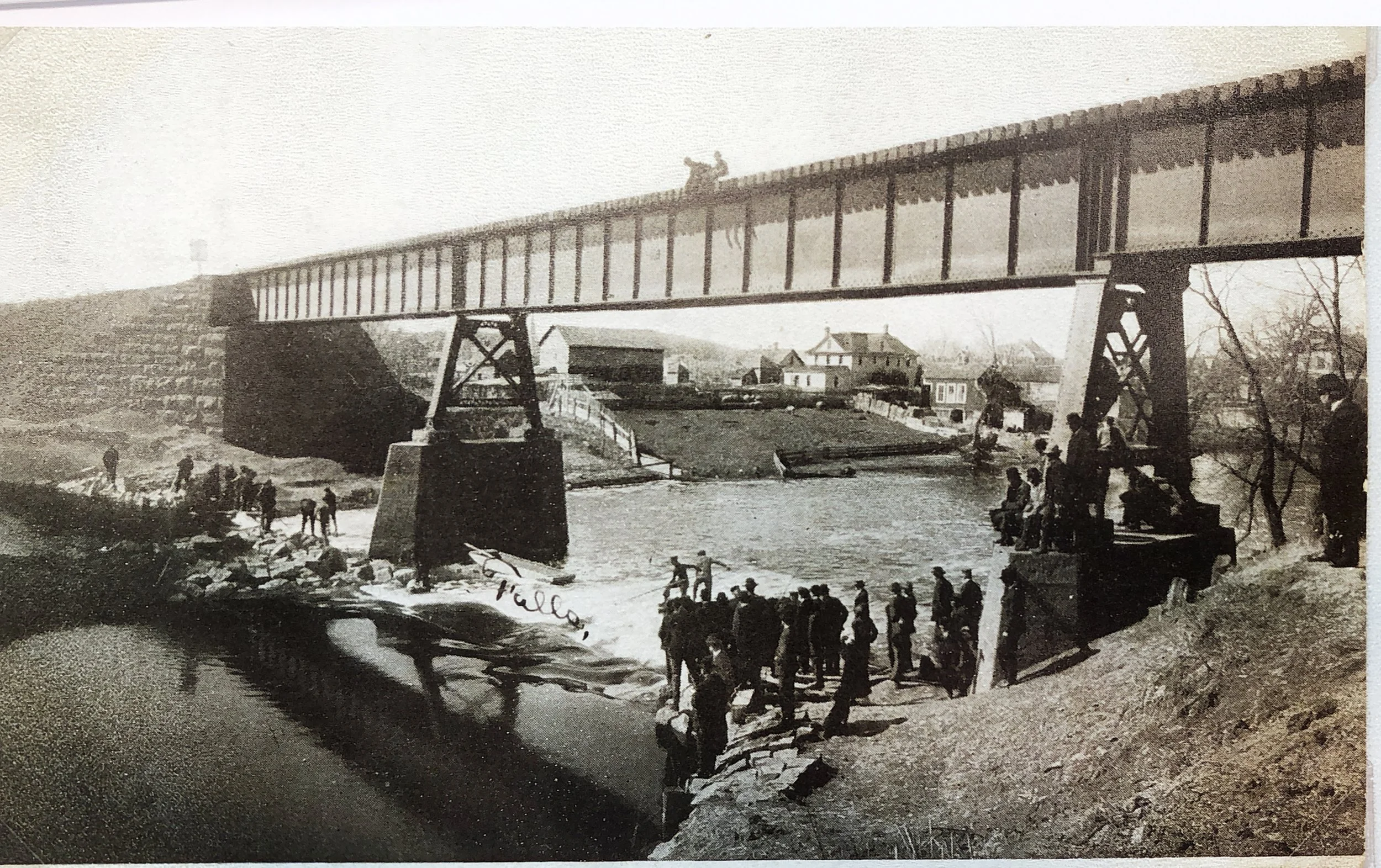
In 1879, this segment of the StP&P was sold to the St. Paul, Minneapolis and Manitoba Railway. The StPM&M had a considerable amount of trackage throughout Minnesota.
By 1890, the StPM&M became part of the Great Northern Railway. The collection of railroads dating back to the St. Paul & Pacific were primarily controlled by railroad magnate James J. Hill.
The Railroad Bridge
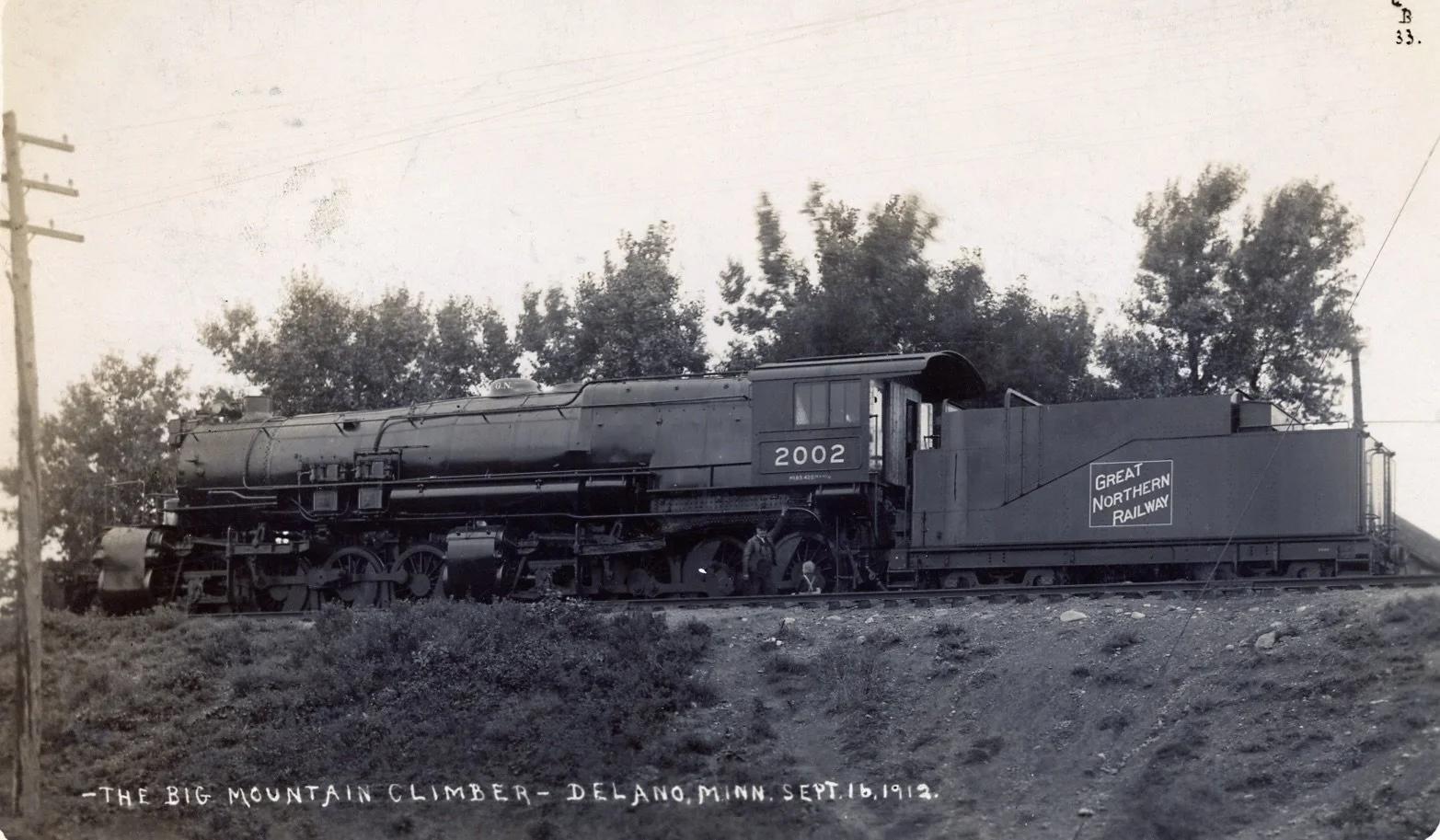
A new railroad bridge over the Crow River in Delano was built in 1904, consisting of four girder spans for a total length of 270 feet.
May 26, 1904 – “A crew of about eighty workmen arrived in Delano late Sunday evening and two more crews, each of about the same number, are expected in a short time, and the work of raising the roadbed through the village will soon be commenced. It cannot be definitely found out as those who have the laying our of the work in charge do no seem willing to impart their knowledge to others, but from what little information we could gather, it is probably that the roadbed will be raised, at the bridge, which is the lowest point on the grade, about ten feet, and that the depot site will be changed to a pint on the south side of the track east of Fourth Street. An overhead bridge will be built on River Street, which it is likely that the crossing on Third Street will be graded up. It is hoped that the Company will put up first-class depot, and no doubt they will as the old one has seen better days. When the work opened up earnest there will be “something doing” and time will be quite lively for a couple of months. We understand that the boarding houses will be erected in the eastern part of the village.”
(from the Delano Eagle, Delano, Minnesota)
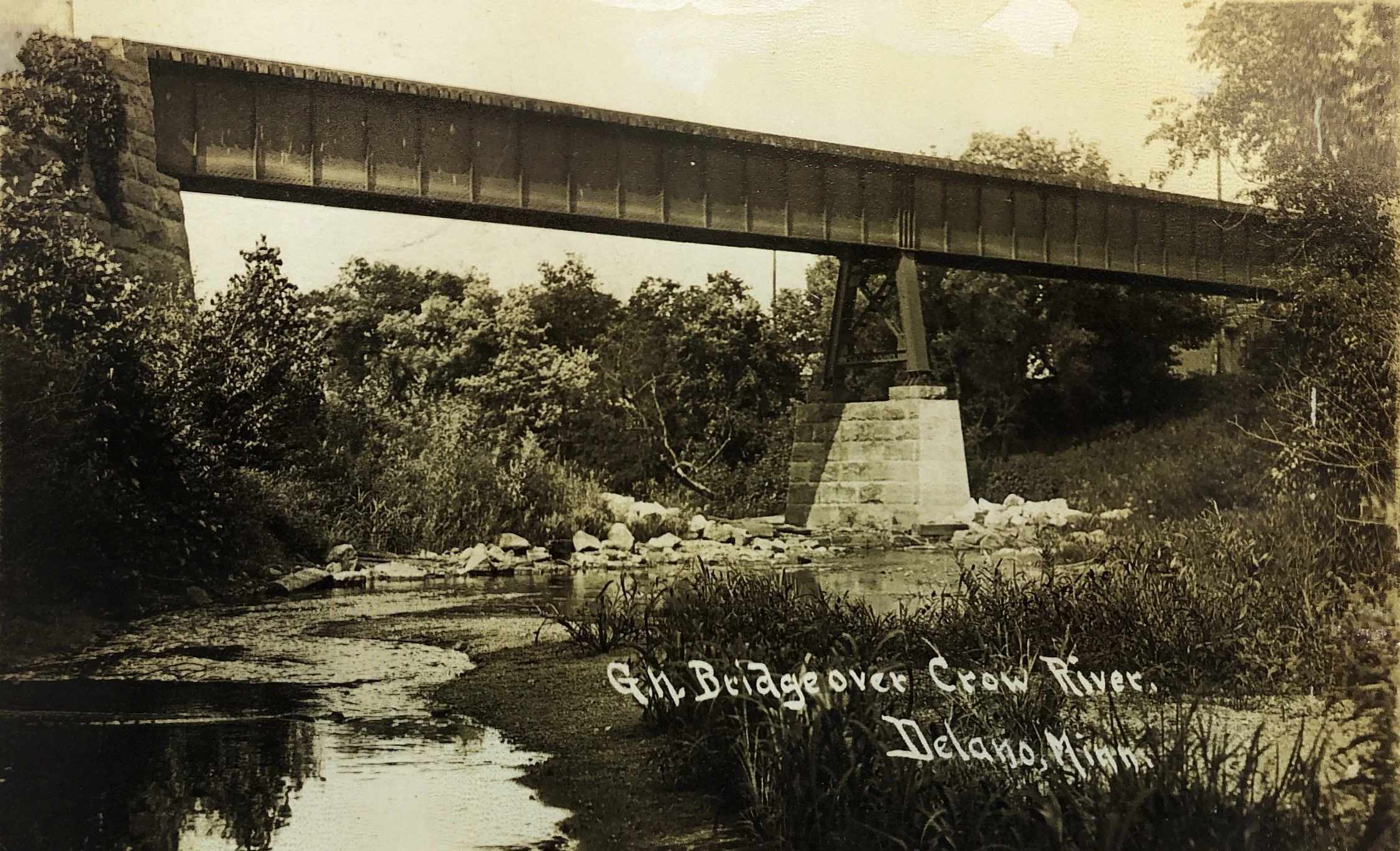
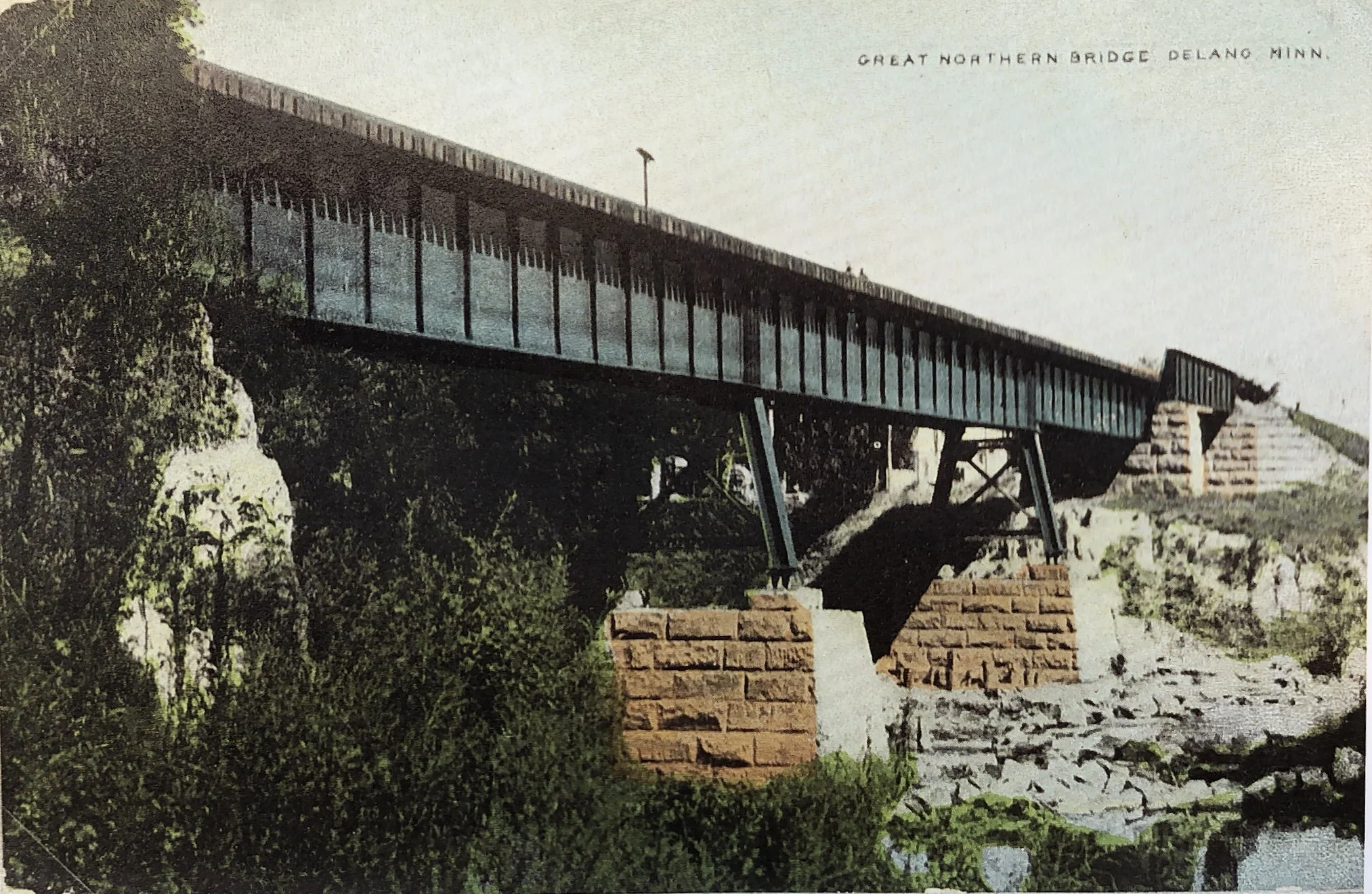
The bridge was extensively rebuilt between 1945 and 1947, including the replacement of both approaches.
“The Delano Railroad Bridge Is Being Rebuilt and strengthened by a bridge building crew. The extensive work, which is necessary because of a new high-speed train the Great Northern is planning to put on this run, will not be completed until around Christmas time, according to the engineer in charge.
Present plans call for the encasing of the present stone bridge piers and extending the concrete right up to the bottom of the bridge itself. Most of the steel will also be replaced and the west side abutment will be lengthened.
To encase the piers in concrete the workers will have to start work eight feet below the surface of the river. At present a temporary dam is being thrown up around the east pier to shut off the water in preparation for the work to follow.”
(from the Delano Eagle, Delano, Minnesota, June 20, 1946)
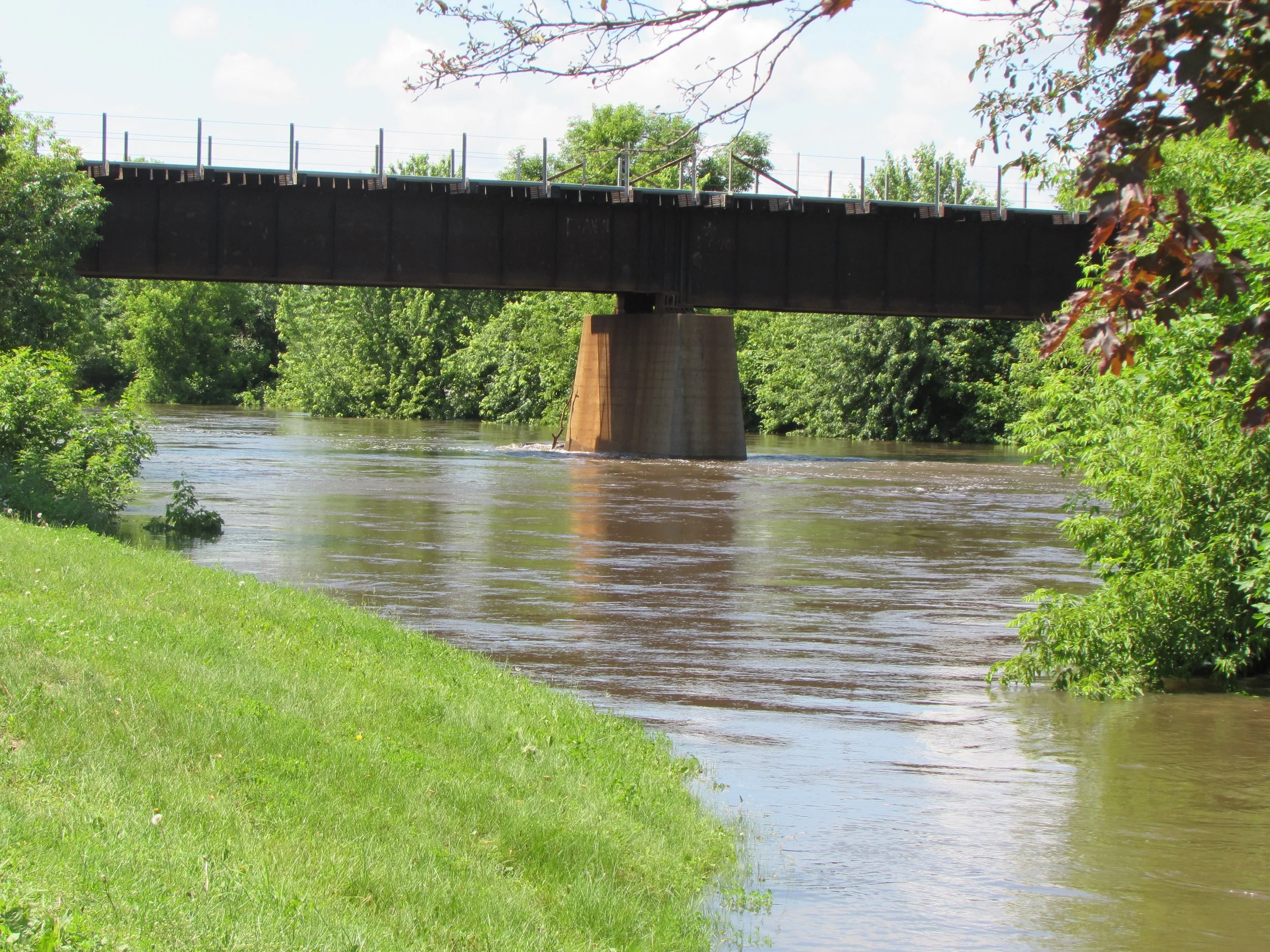
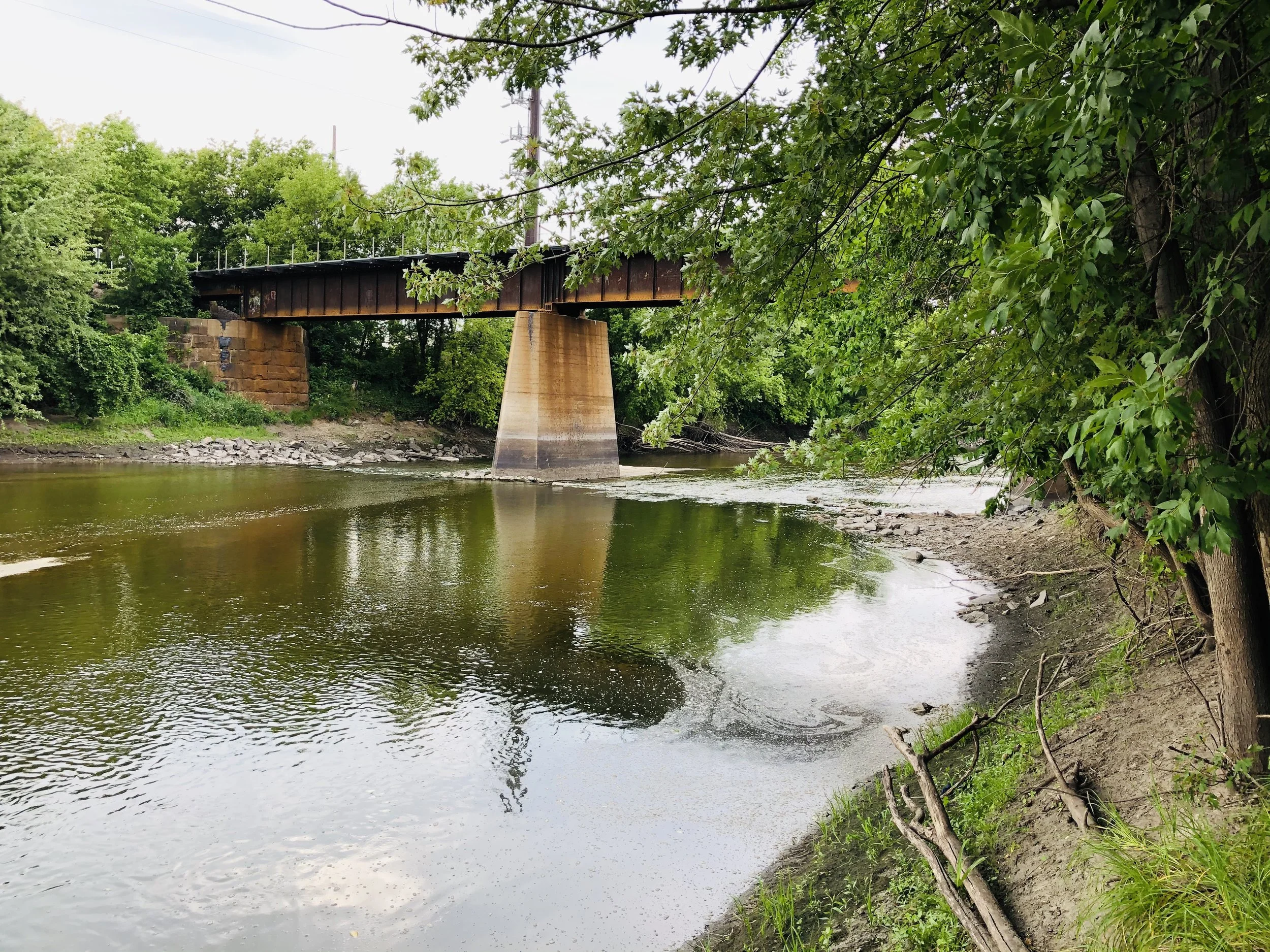
2020 Photo
Currently, the bridge consists of a pair of deck girder spans, a 60 foot deck, a pair of steel stringer spans and a concrete span. The bridge rests on concrete and stone abutments.
By 1970, the Great Northern merged with rival Northern Pacific and Chicago Burlington & Quincy to form Burlington Northern Railroad.
In 1996, BN merged with Atchison, Topeka & Santa Fe Railway to form BNSF Railway, the current owners of this line.
(Bridge and Railroad line information from John Marvig and Contributors, 2010-2020)
2020 Photo
The Depot
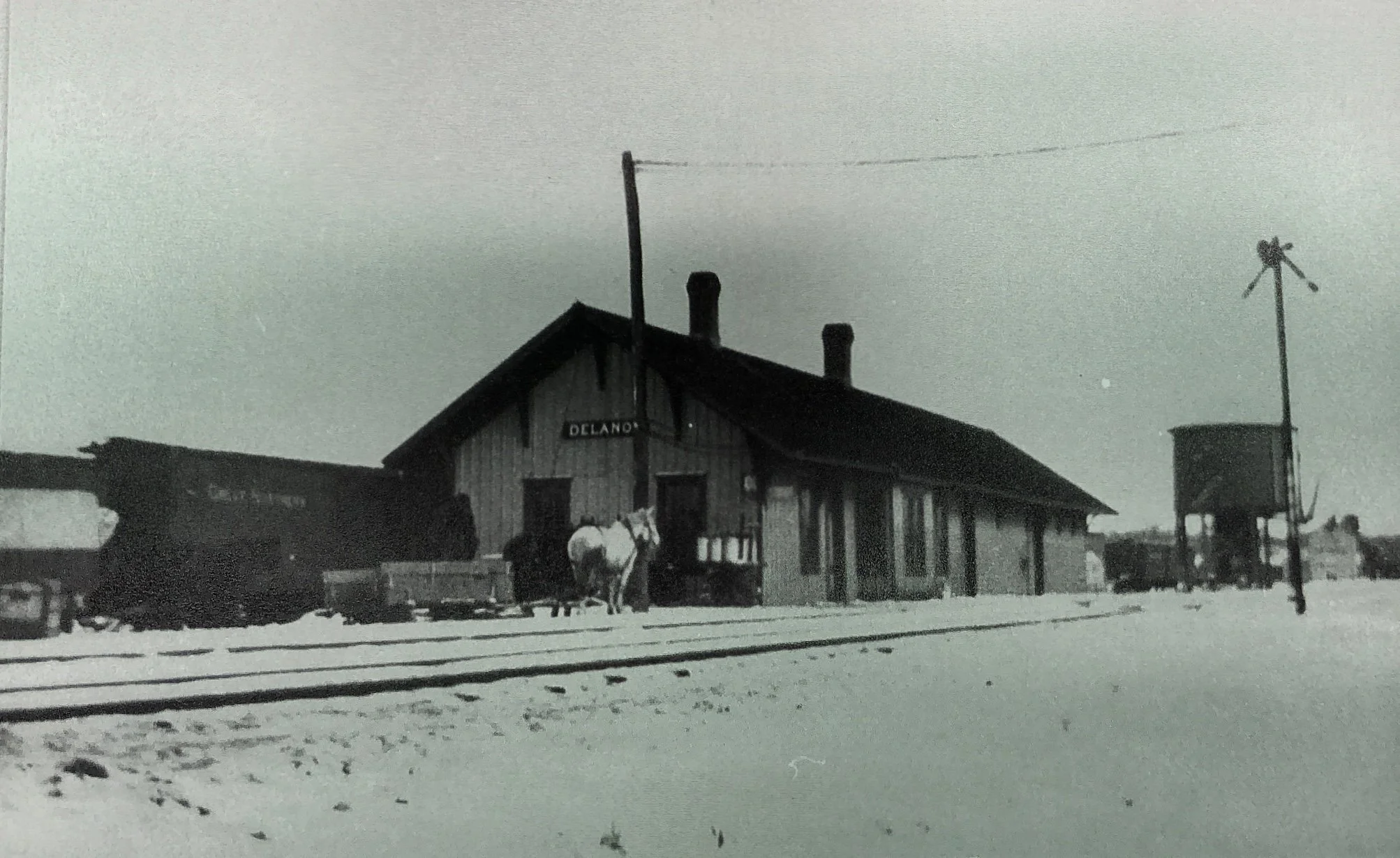
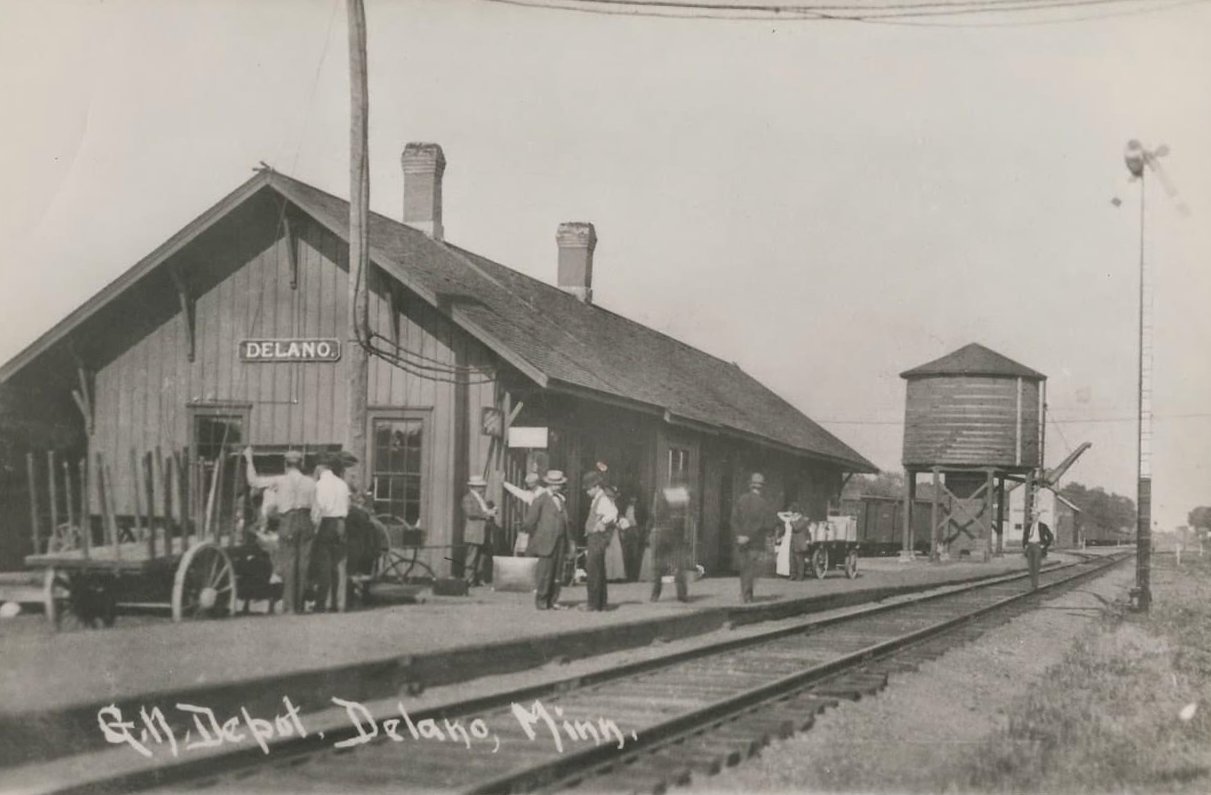
The Delano station was on East Franklin Avenue at South 2nd Street. According to the 1915 GN Valuation Records, a new station was built here in 1885 and was remodeled/expanded in 1904.
Here are excerpts from the Delano Eagle, during the construction of the new depot in 1885:
May 14, 1885 –“ It is amusing to note the rapid steps taken by the railroad company towards building a news passenger depot at this place, and how slowly the structure rises. Two or three times a week some one among the many magnates of the company (and they are all more or less magnates, from General Superintendent down to the tie-men) jumps off while the train stops, takes a tour around the old shanty, looks wise and boards the train again, leaving the wondering public, and expectant employees confident that the coming day will bring a crew of carpenters to commence on the new building. The present system of a sidetracked depot makes it inconvenient for travelers and doubly so for the station employees who are obligated to carry heavy express on their shoulder across he track.”
May 28, 1885 – “It is generally given out that the railroad company have promised a new depot for Delano in the near future, but when, to whom and by whom the news was communicated, we are unable to find out. We will believe in a new depot as soon as we see one commenced, but not before. The song has been sung so frequently that we have tired of the tune, and can’t muster up enough credulity to take stock in a new depot upon everybody’s say-so”.
July 2, 1885 – “Not less than fifty workmen are employed by the railroad company in Delano at the present time, and the work here is being rapidly pushed forward. The lumber for the new depot is being unloaded and piled as fast as it comes in."
July 16, 1885 – “Work still continues upon the new depot, and the structure is fast approaching completion. A gravel crew is at work on Franklin avenue, making room for a sidetrack, and the high bank is fast melting away. The improvement most felt in the new passenger depot promises to be the facility of getting on and off trains, the platform being on the main track instead of as it now is, on a side track. The station men will also bless the new depot’s advent on account of the greater ease in transferring express matter.”
July 23, 1885 – “The new railroad depot at this place is fast nearing completion, and promises when finished to be one of the finest of the railroad buildings west of Minneapolis. The grading of Franklin avenue still continues, the dirt at present taken there from being dumped by the side of the old structure, with a view of filling in the sport the latter now occupies. If the railroad management would only go a step farther and grade Railroad avenue at the intersection of Second street to a level with the track, or with a slight grade, both the village and the railroad management would be mutually benefitted, and the appearance of the new structure enhanced. Burying the old building from the sight of the avenue public, as is now does, looks much like “hiding one’s light under a bushel.””
July 30, 1885 – “The new depot is about finished, lacking at present little more that an outside garment of paint, and is in all respects a credit to the company and the village. The furniture, books, &c. will be moved from the old building, and it removed as soon as circumstances permit. If there were any certainty that the company would act on a suggestion, we would call their attention to an improvement in the matter of platforms. When trains commence to stop at the new depot, a large number will get on and off trains from the north side on account of convenience and saving of time. For the benefit of these a narrow platform, such as seen in many eastern depots, might be set in between tracks the length of the depot, high enough to make the descent from or mounting to the cars easy; such a platform would not interfere in any way, and would be a vast improvement on the old plan.”
August 27, 1885 – “The depot employees moved into their new quarters yesterday, and freight and passenger trains commenced unloading at the new building. The old structure is being dismantled, and will be removed at once.”
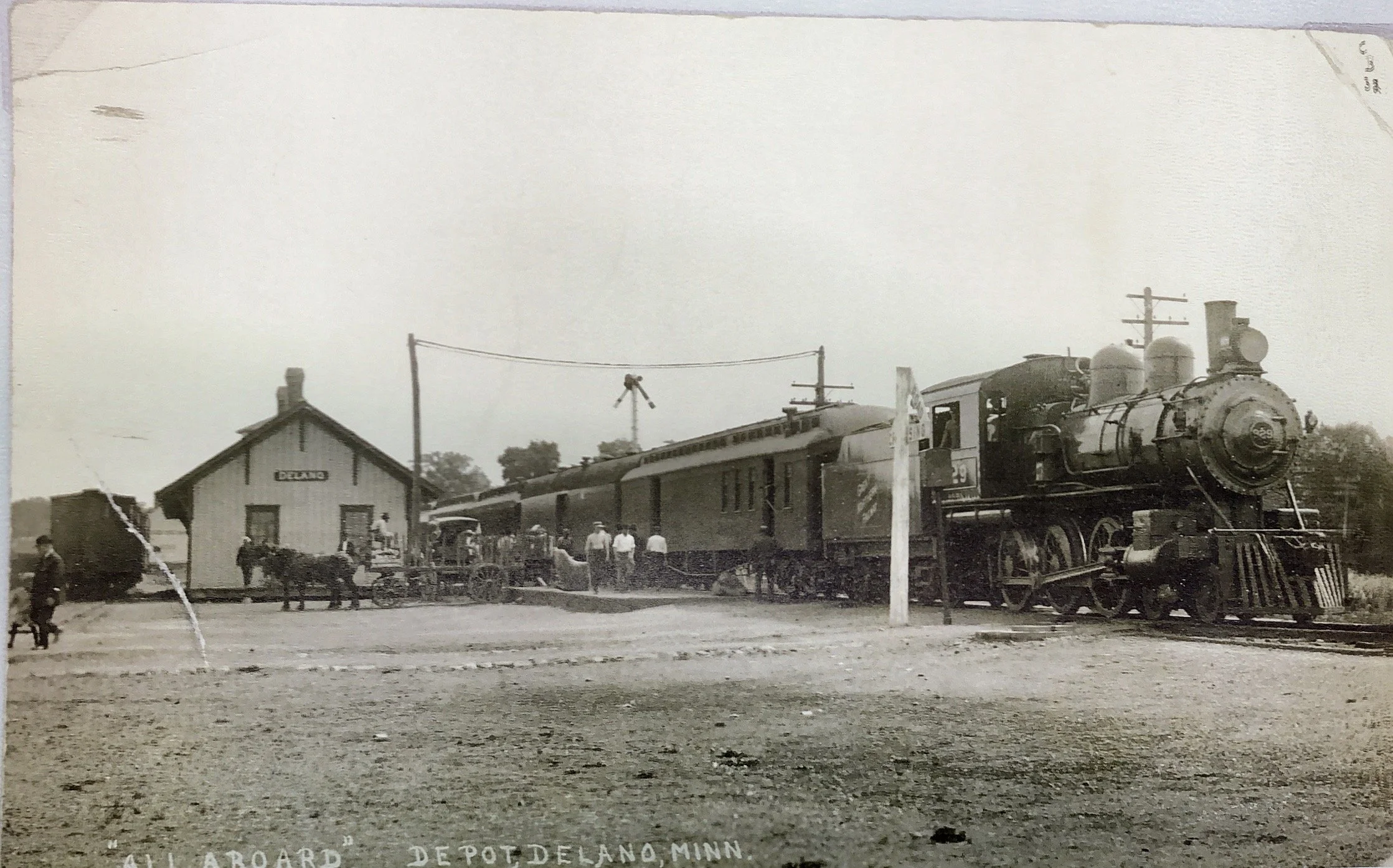
The depot employees moved into their new quarters in August of 1885, and freight and passenger trains commenced unloading at the new building. The old structure was dismantled and removed.
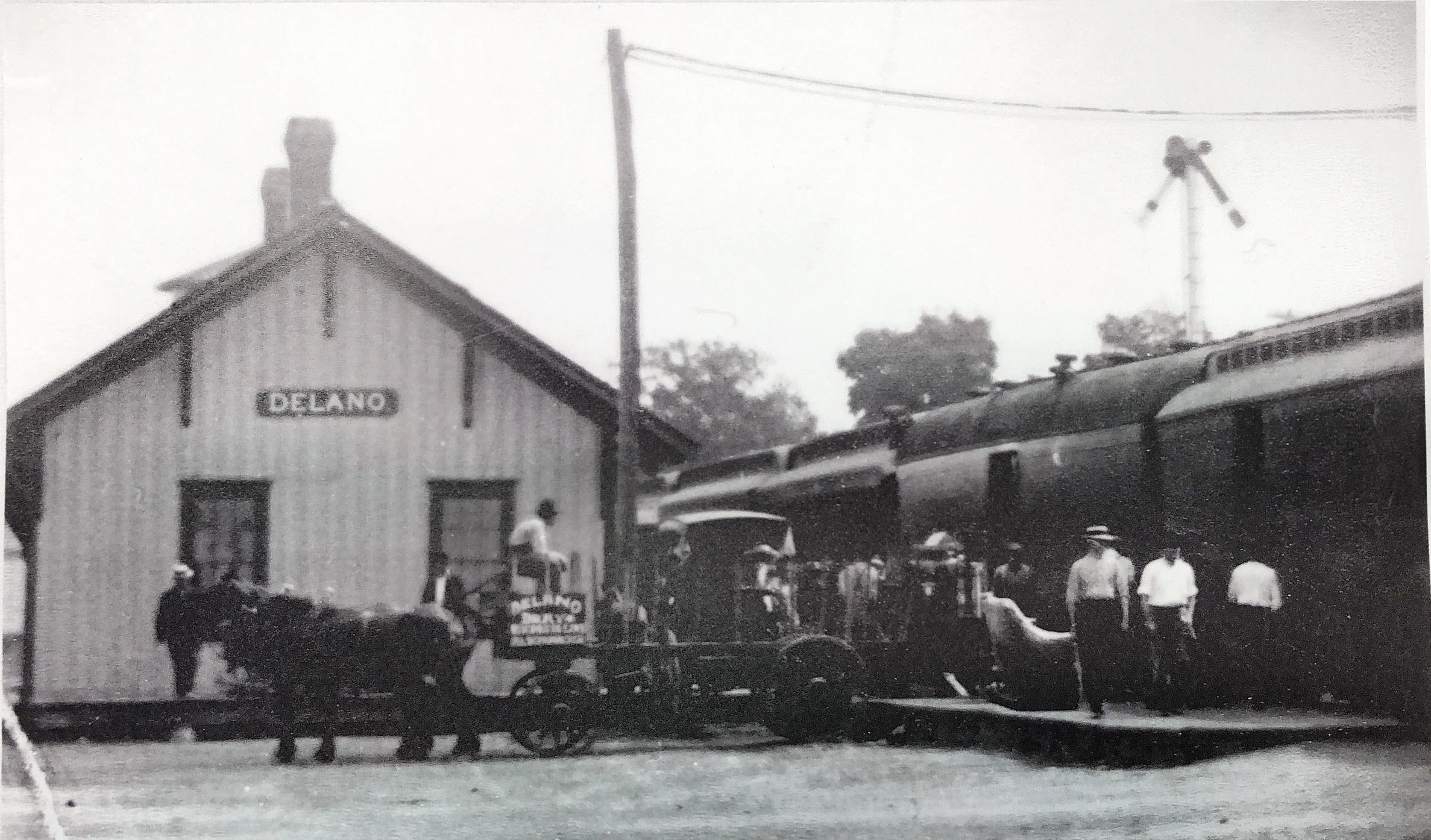
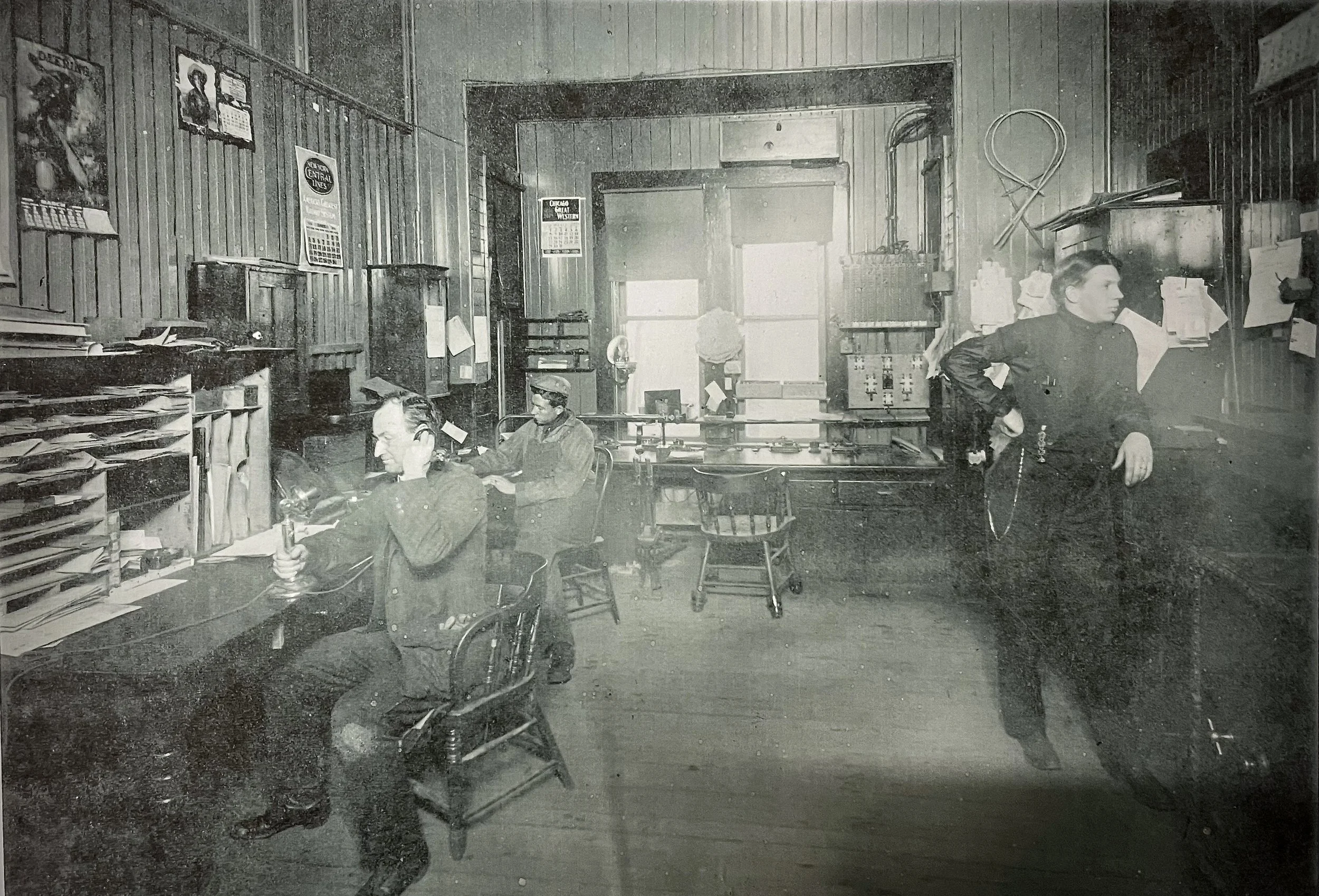
Interior of the Depot
Depot Agent
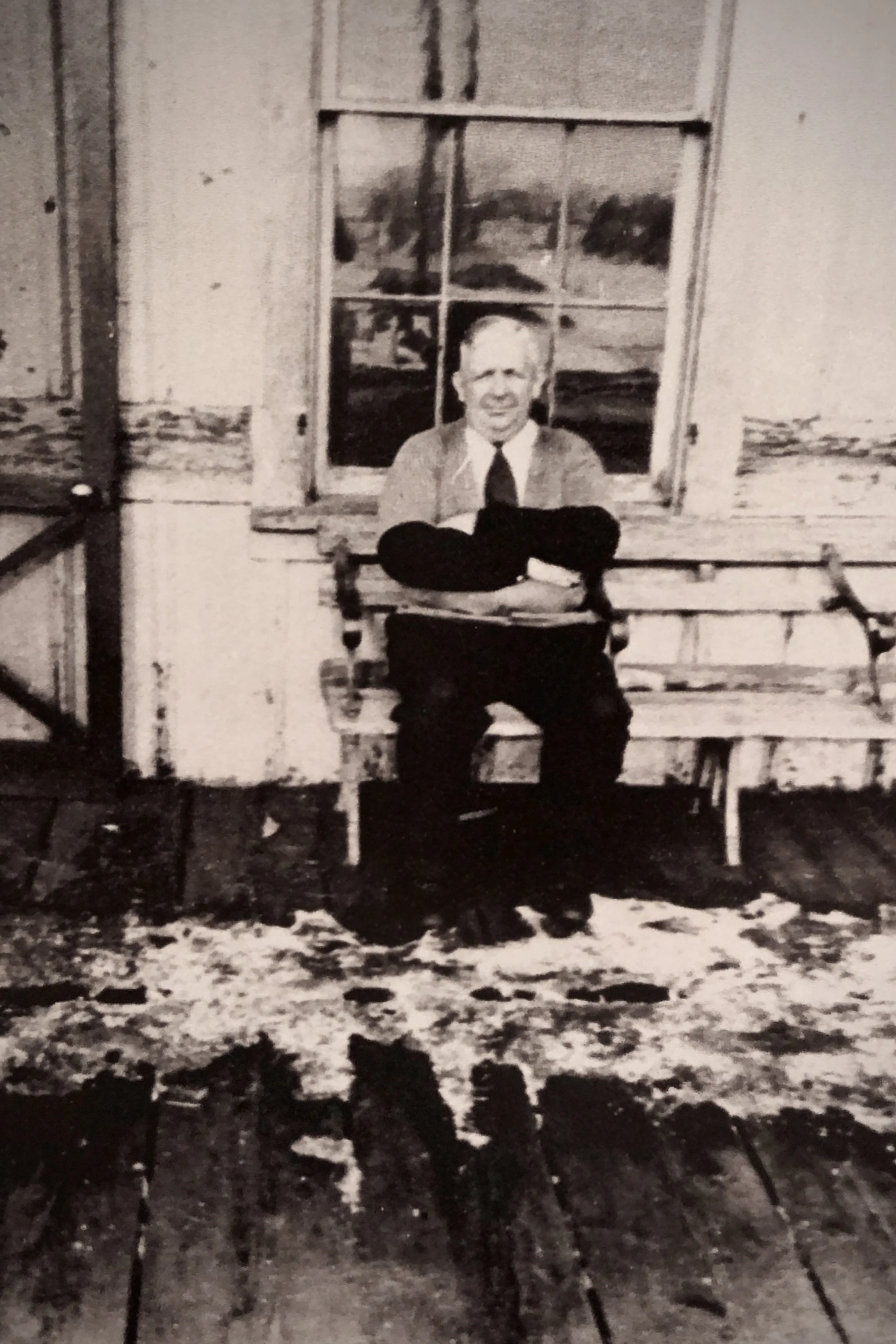
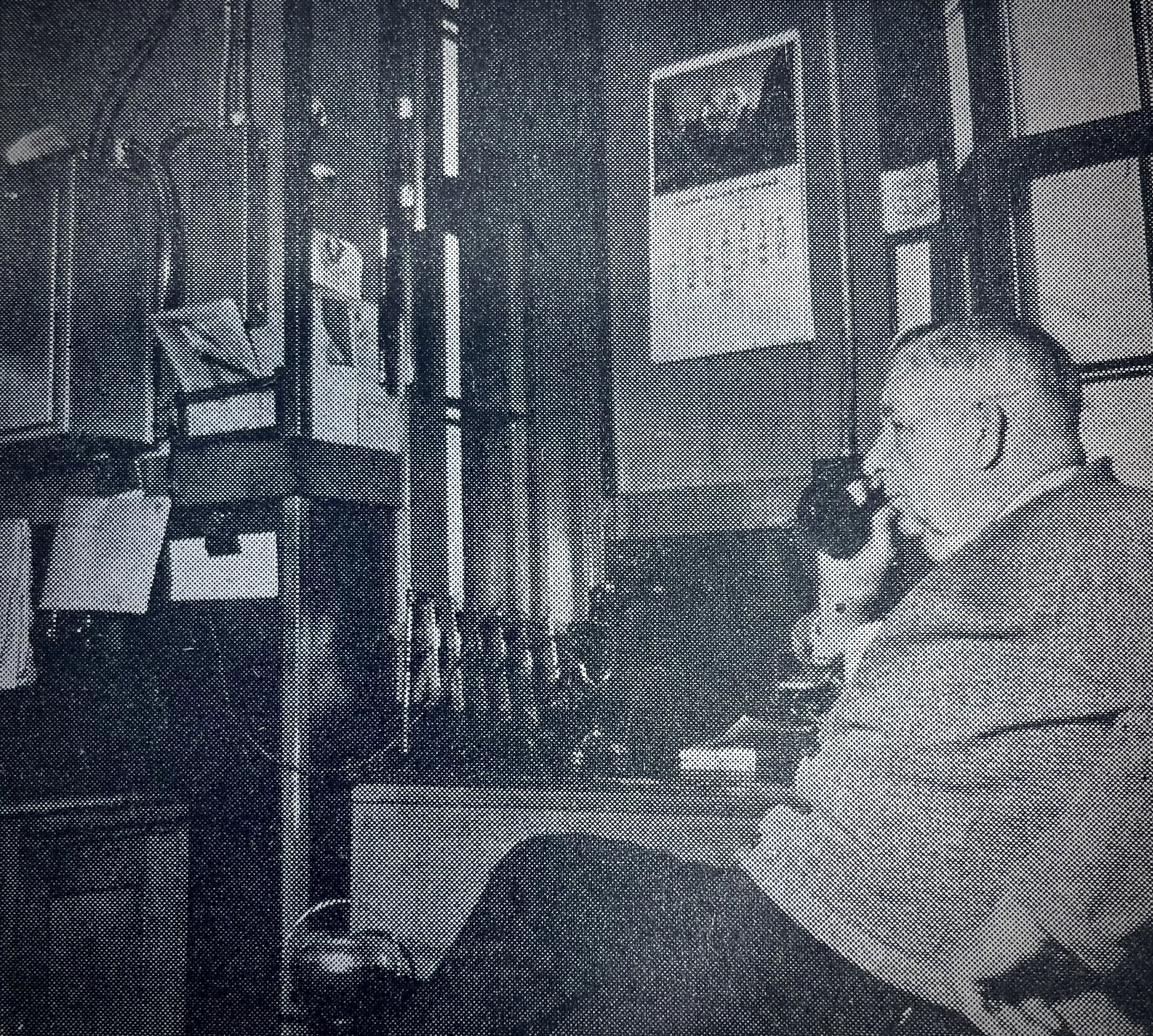
Every depot needed an agent. A.L. Poffenberger was the agent from 1905 until 1932, when he was fatally injured in an accident at the station. Earl Walter was next appointed as the Delano Depot Agent. In 1954 new communication equipment was installed in the depot. Earl’s title had changed to Station Master by then.
Lost Railroad
“One of Delano’s oldest landmarks, the building at one time used by the railroad company as an engine shed, was torn down in 1890 and moved to Willmar. That ancient building was associated with Delano earliest days when the timber of these regions was used for fuel on the locomotives and when that by-gone institution, the wood train, was in all its glory. Some of the oldest conductors in the Northwest associate their start in life with “the old round house up at Delano” and the building was missed by hundreds of passersby who have noticed it for many years. The site was then occupied by the Minneapolis Malting and Brewing Company who erected a large warehouse on the spot.”
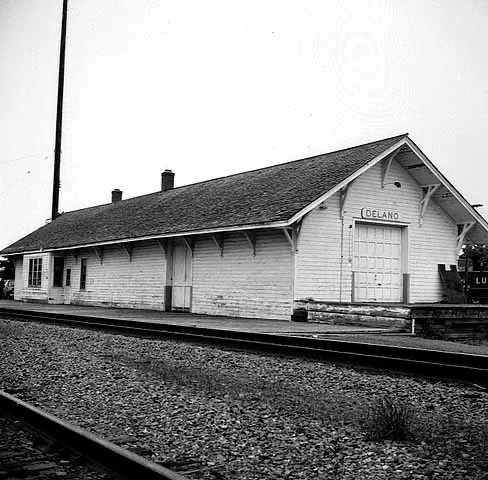
The depot was torn down in 1988
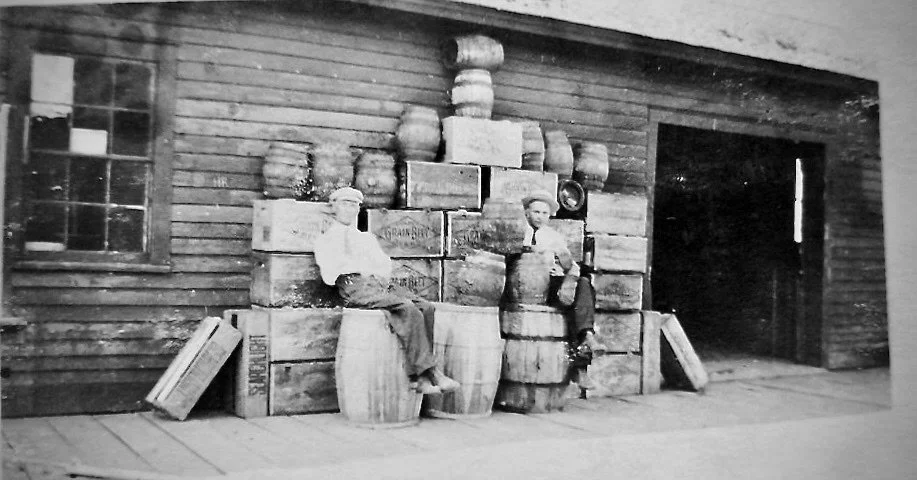
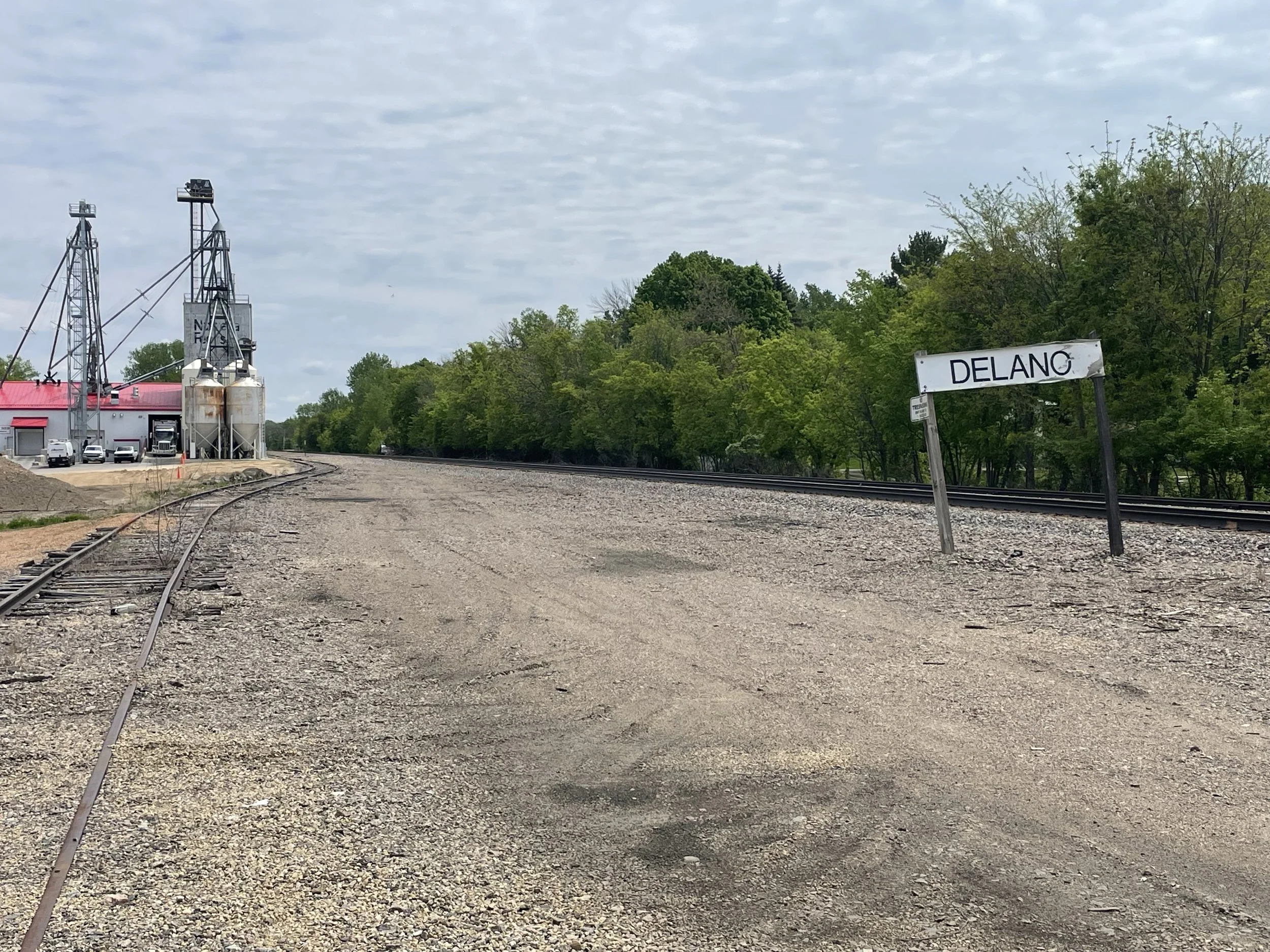
The warehouse was torn down in 2026.
2026
Train Collisions
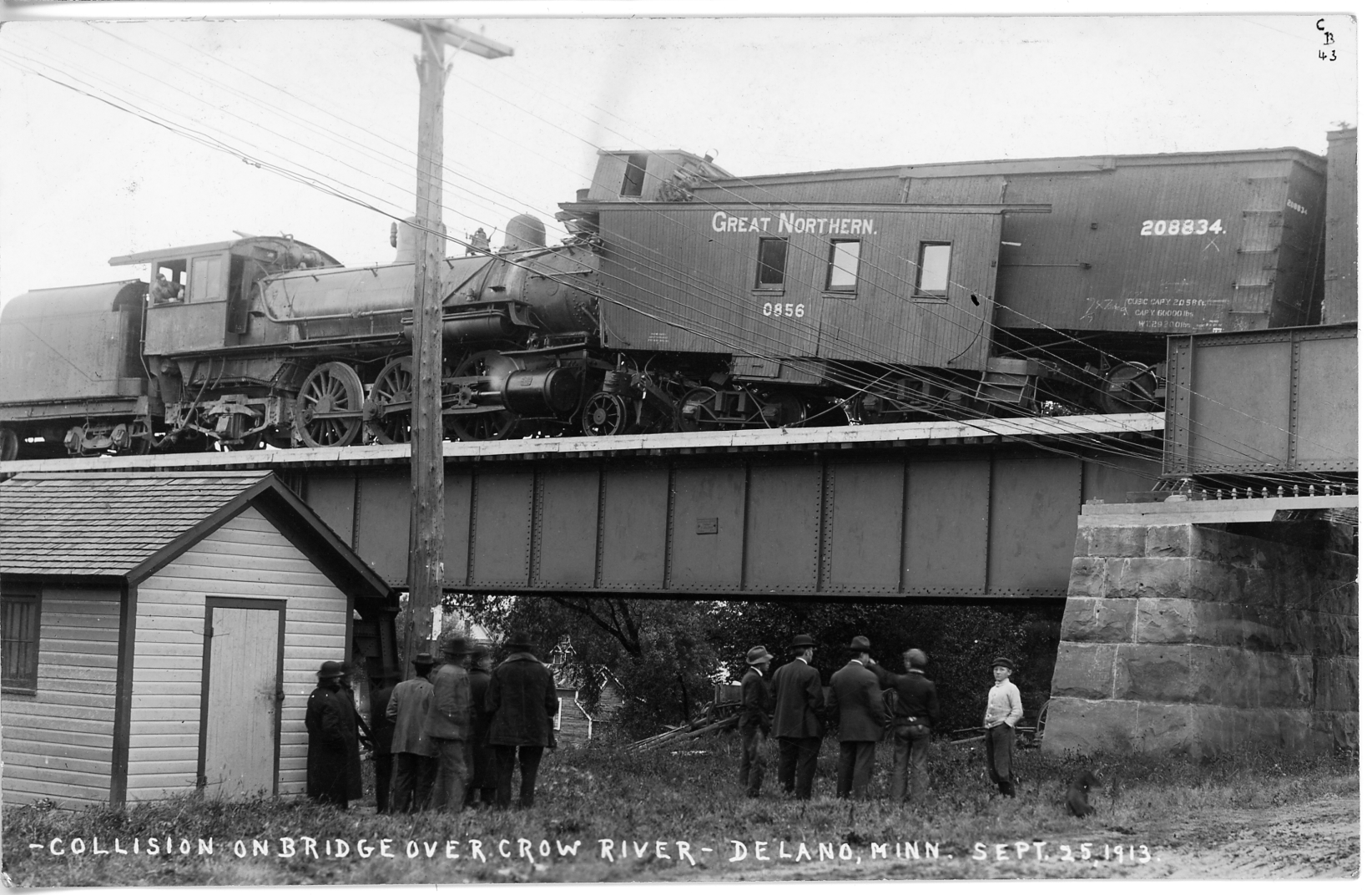
September 25, 1913
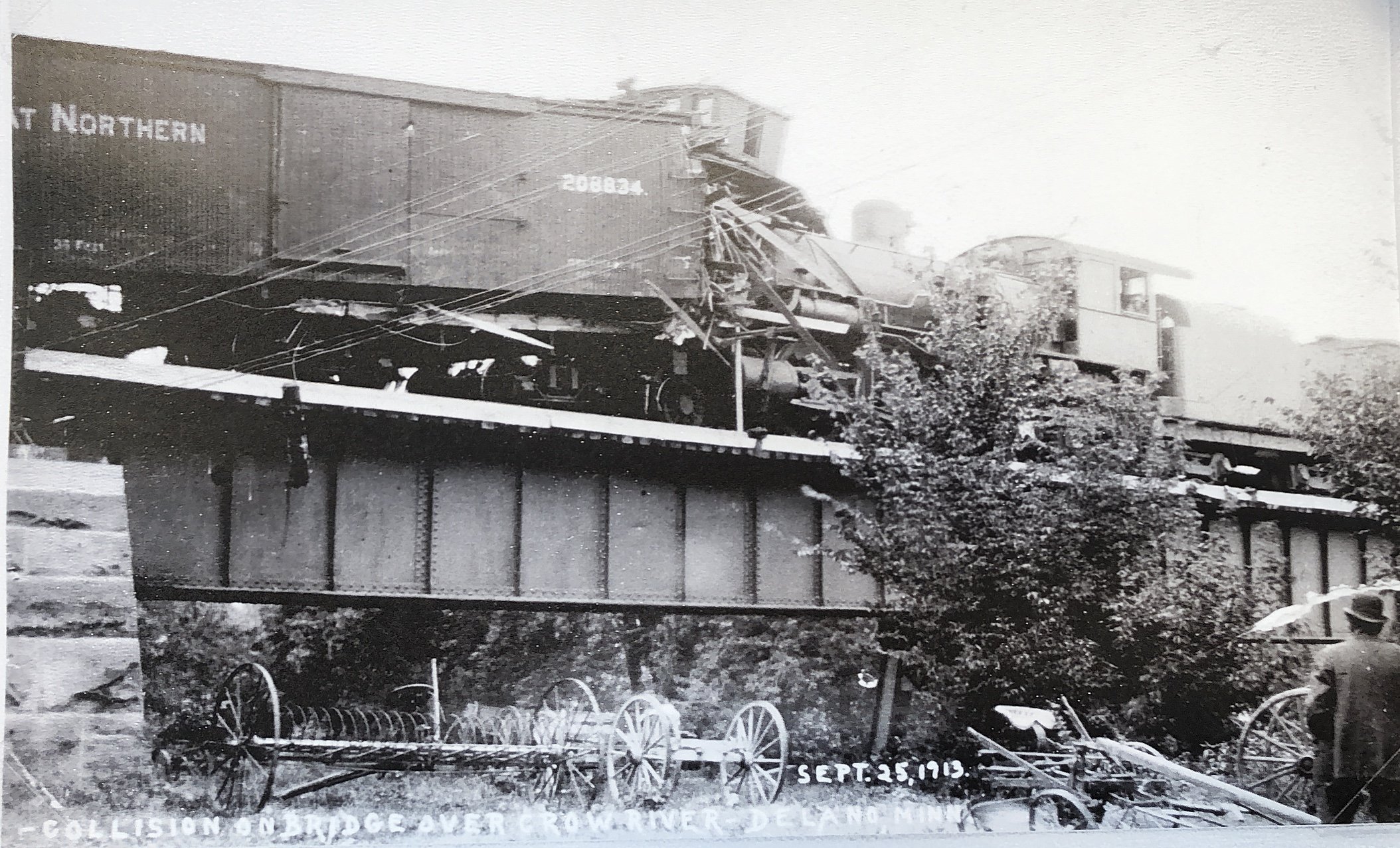
Photos by Claudia Beck
Reported in the Delano Eagle: “Two extra freight trains had a rear-end collision on the bridge at River street. The flag man gave the engineer on the second section a signal to come ahead, and he did so. When he found the track was not clear he was unable to stop in time to avoid the collision. The caboose and one box car were smashed, the caboose into kindling wood. Fortunately, no one was in either car. It is certainly a bad place for a wreck, but in this instance none of the cars or the engine left the track. Had they done so they would have gone into the river.”
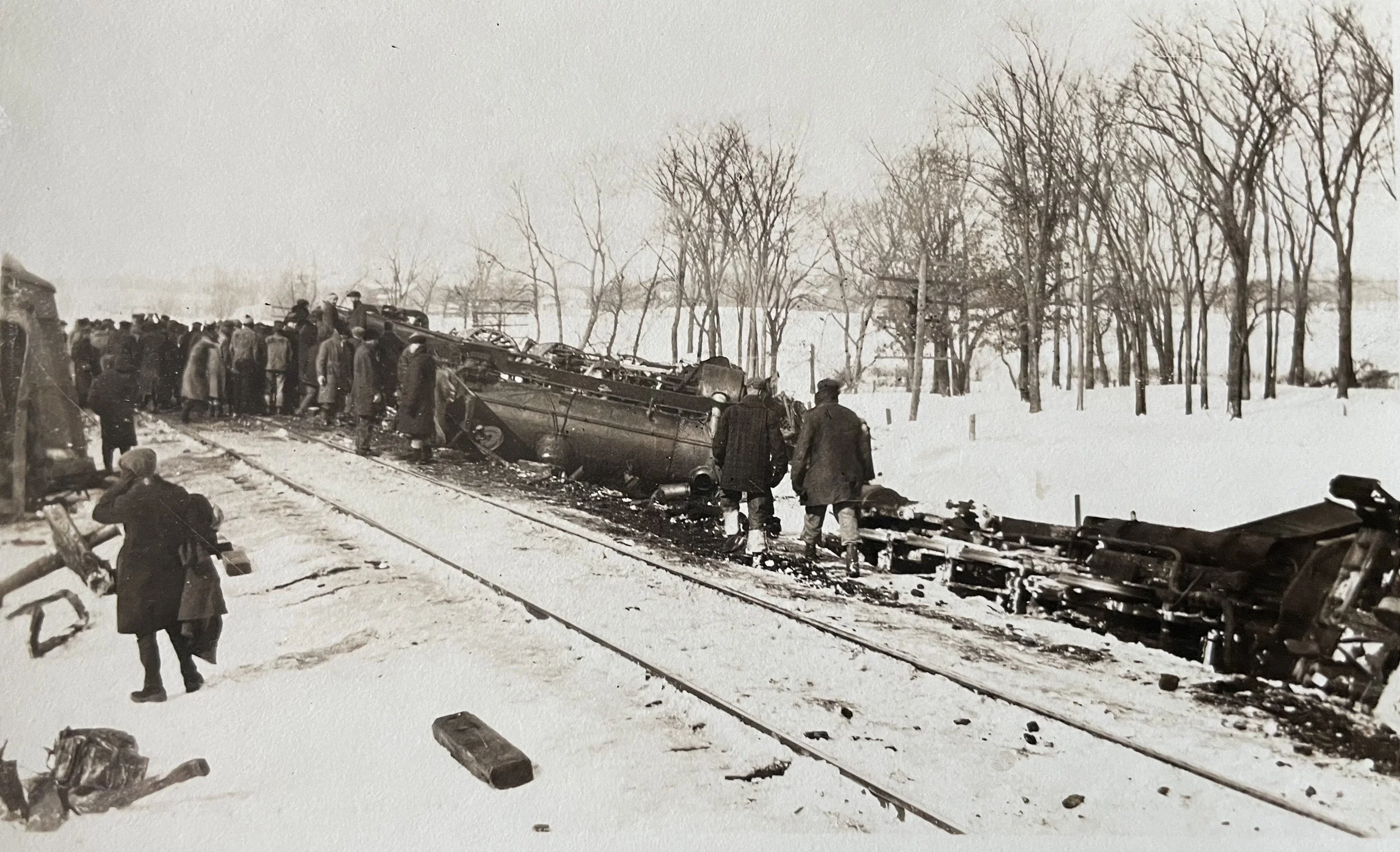
February 23, 1922
A passenger train and a snow-plow train collided three miles west of Delano on February 23, 1922. The blame for the collision between the east bound passenger train and the heavily ballasted west bound snow plow was placed on the crew of the snow plow train. It was decided that their orders were clear, but that they either mis-read or misunderstood them. The two engines on the passenger train and the snow-plow engine were thrown down a deep embankment into the ditch and the mail car was thrown across the bank on the opposite side. Four of the six men comprising the three engine crews were killed – probably instantly and the fifth man died before the rescuers could ger him to the hospital in Montrose. Several were injured more or less seriously and were taken to the cities on a train sent out for there immediately, and to which the passengers were all transferred. It was bitterly cold, and the snow piled along the track by the snow plow which had made one trip over the road after the storm, but the passengers made the best of it and were surprisingly calm. Trains were delayed about twenty-four hours. It is understood that the crew on the snow plow had realized their mistake, stopped their train, and intended to back into Delano when the collision took place. If the snow-plow train had been under way it would have plowed its way through the passenger train. (from the March 2, 1922 Delano Eagle)
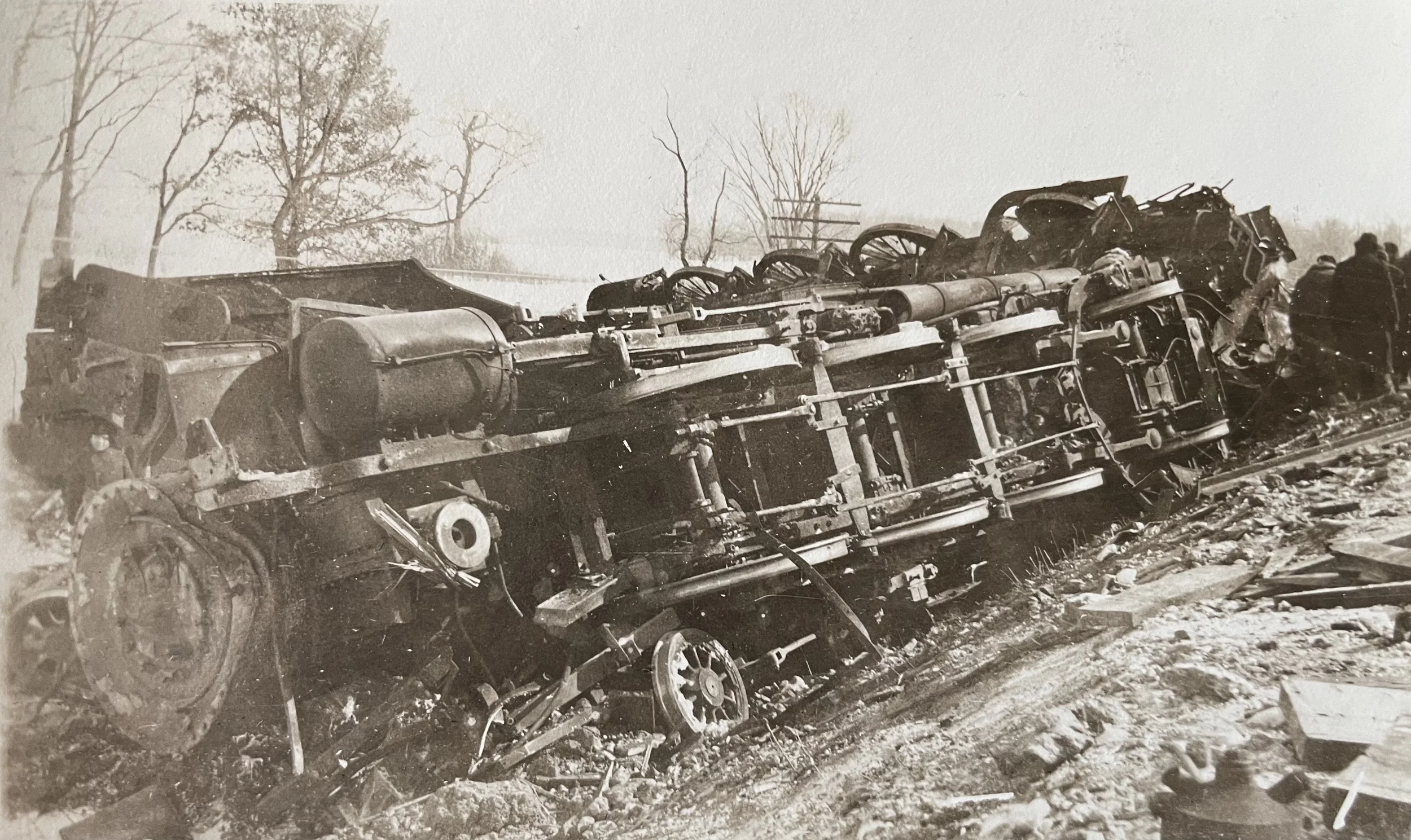
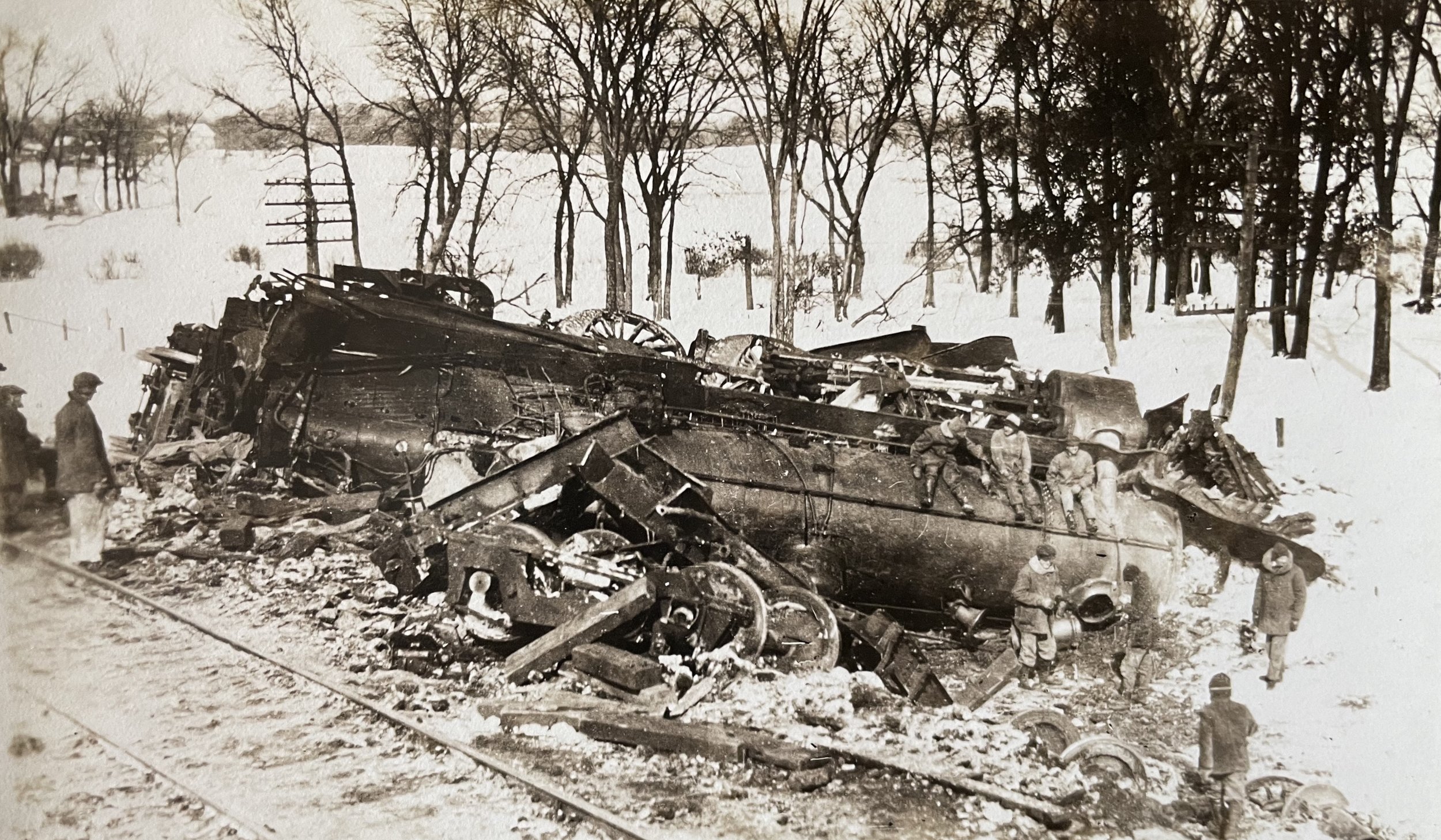
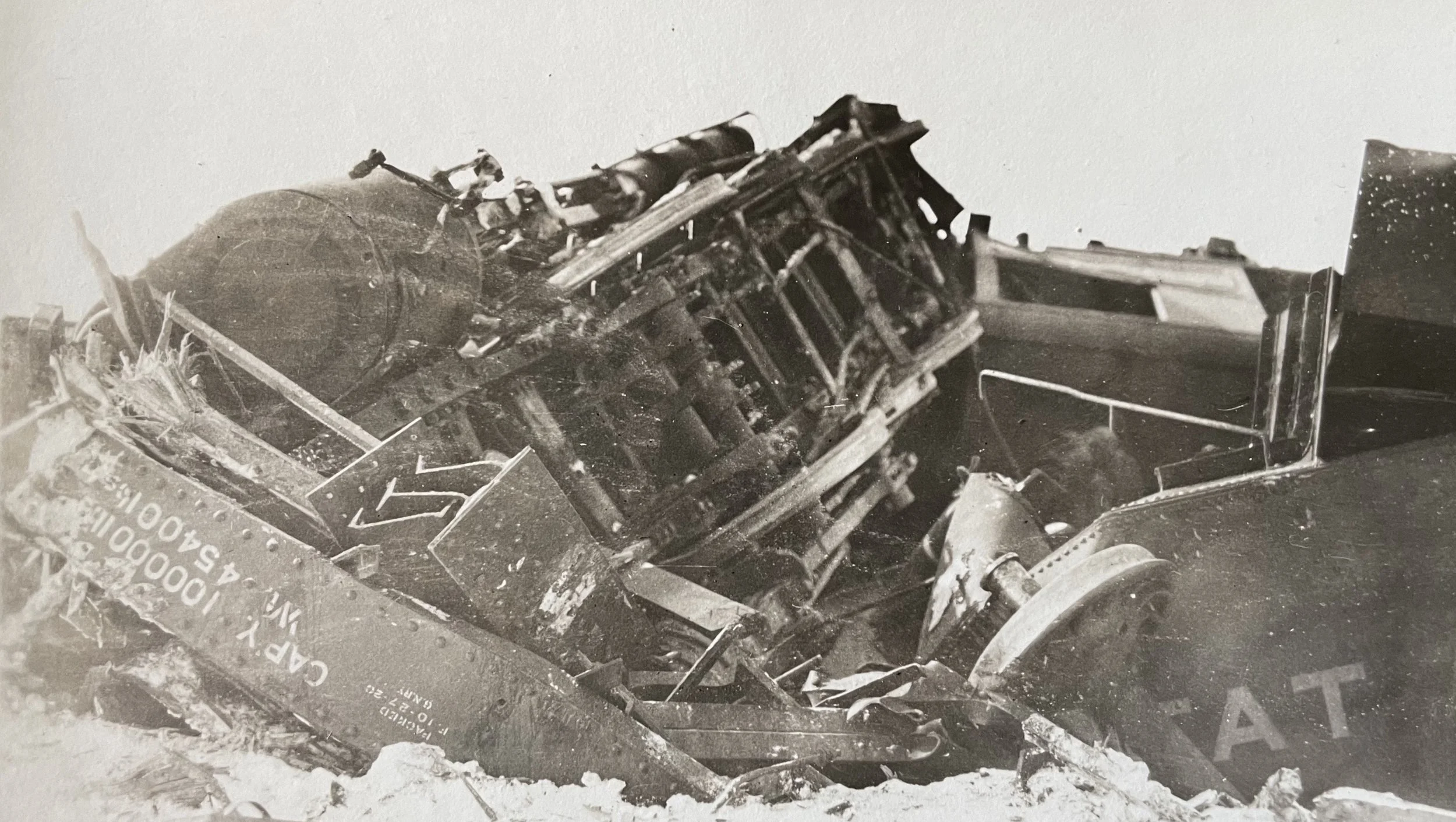
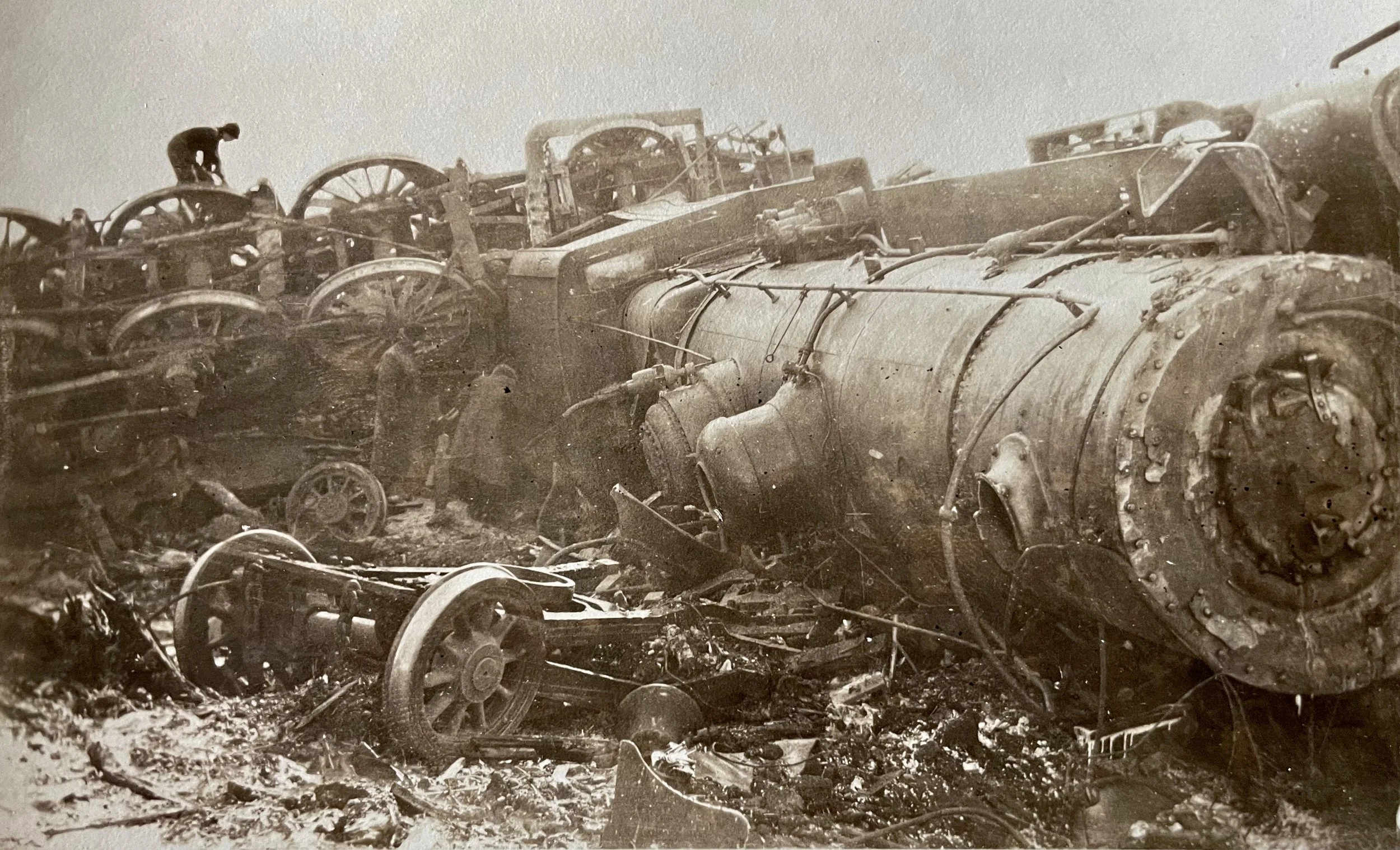
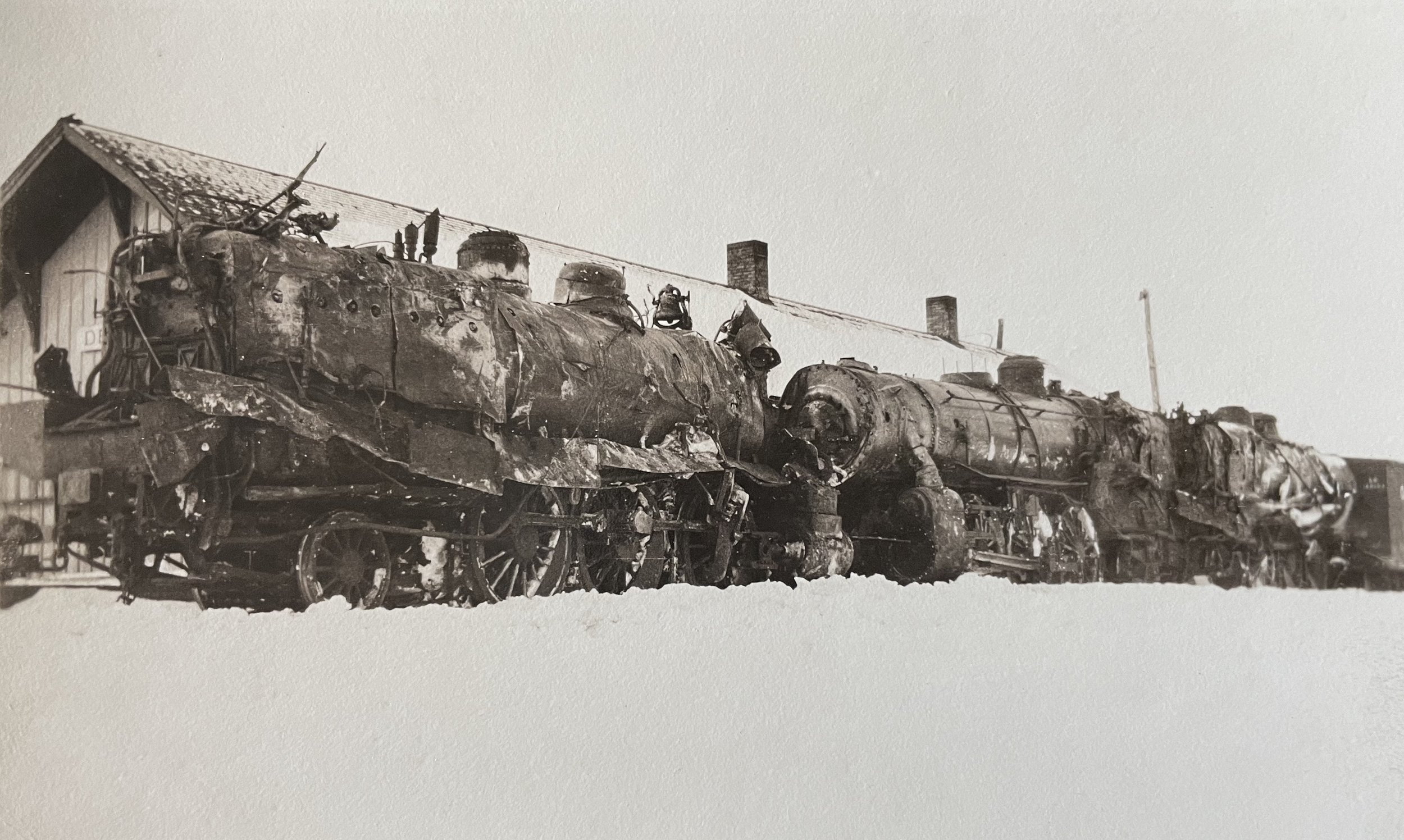
A week after the collision the three engines which were destroyed in the fatal wreck had all been raised and are shown standing on the track north of the depot in Delano, awaiting removal to the shops. One of the engines still had fire in the fire box when brought in.
Kathy Gow wrote this story about the collision and her dad:
“On Thursday, February 23, 1922, my dad, Lauren Horsch, who was almost 13 years old, went to the well to get a pail of water on the farm where he lived with his parents, Andrew and Margaret Horsch and his brothers and sisters. It was 4:40 p.m. He heard a train whistle from the east and another train whistle from the west. He saw the two trains collide. Somehow he ran down to the railroad track which was located quite some way north of the house. His dog went with him. Passengers were on one of the trains and there were a lot of neighbors who came to see the accident. Four of the six train crew died instantly, scaled to death by the steam. Another crew member dies before he could be taken to Montrose. When my dad returned later to his house he had to wrap his dog in a blanket in the barn because he was cold and shivering.”

The content of this page is brought to you by the Delano Spirit of Community Trail Committee in honor of Delano's 150th Anniversary.