

The Spirit of Community in Delano is defined by the
Creativity, Resilience, and Community Investment of its people.
Indigenous Peoples
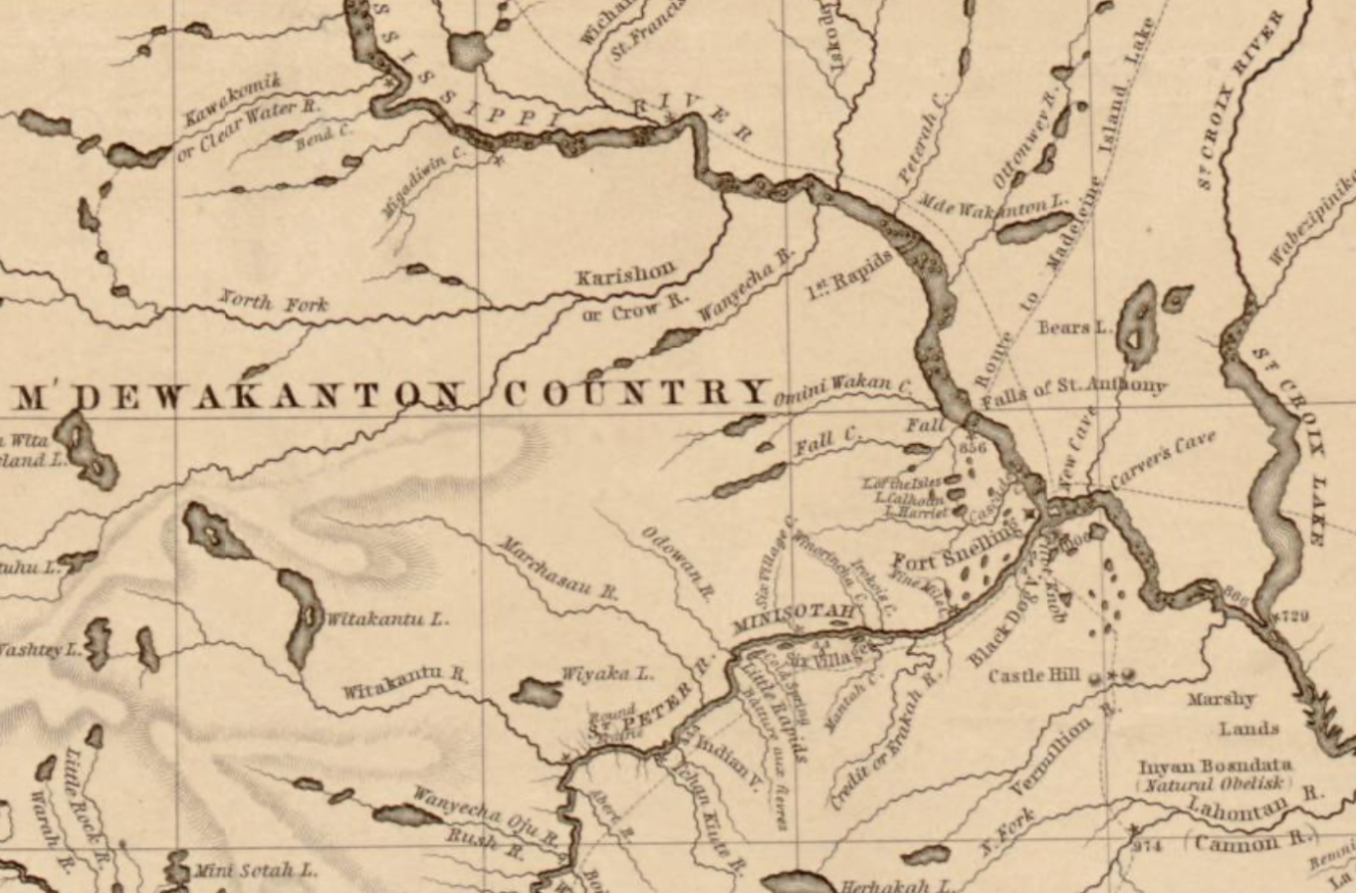
Long before Delano was founded, the land along the Crow River was part of the homeland of the Dakota people, who had lived in relationship with the land for centuries. Their presence remains reflected in many Minnesota place names, including Minnesota itself, derived from the Dakota Mni Sota, meaning “cloudy water” or “sky-tinted water.” The Dakota moved seasonally between winter camps in protected woodlands and summer homes near water and planting grounds, hunting, gathering, gardening, and passing their history and traditions from one generation to the next. Central to Dakota life was an understanding that people were related to the earth, water, plants, animals, and sky and therefore had a responsibility to care for them. This land was not simply a place the Dakota passed through—it was their home. Delano’s later settlement and development took place only after Dakota people had been displaced from their homeland through treaties, forced removal, violence, and exile, making their history an essential first chapter in understanding the story of Delano.
The story of Delano begins with the story of the land on which the city was founded. Delano’s beginning was possible only because Dakota people, who for centuries had lived on and identified the land as their relative, had been pushed to reservations, killed, or exiled out of Minnesota. Evidence of their presence is in the very names of places throughout the state, including Minnetonka, Chaska, Cokato, Wayzata, and Minnesota.
“When the first white men penetrated this area in the seventeenth century, most of the area was held by the Dakota. The Dakota, having been here for hundreds of years, had named all the landmarks. The name Minnesota is a Dakota word, Mni sota, which means “cloudy water” or “sky-tinted water.” The name became official at its statehood in 1858.
As the seasons changed, the Dakota moved making their rounds upon the land, repeating the pattern year after year. Summers were hot and winters were very cold.
With the arrival of winter, the Dakota moved to the protection of the woods to set up tepees. They pegged the walls (mostly made from deer skins) to the ground and piled snow around the edges to keep out the wind. They gathered around the fires built in the center of the tepees. This was the time that the older Dakota men taught the next generation and their children about the history of their people and the ways of the Dakota through story-telling, reciting the well-known stories over and over. They told their children how they believed they were related to all things: the earth, the trees, the sky, the sun and all animals. Everything in creation needed to be respected and treated as it was a relative of theirs. ‘Our people lived not just on the land but with the land, and felt a responsibility to it, to care for it, because it cared for us,’ states Gwen Westerman in an interview conducted by Gwen Briesemeister for the Delano Oral History Sesquicentennial Project (2025).
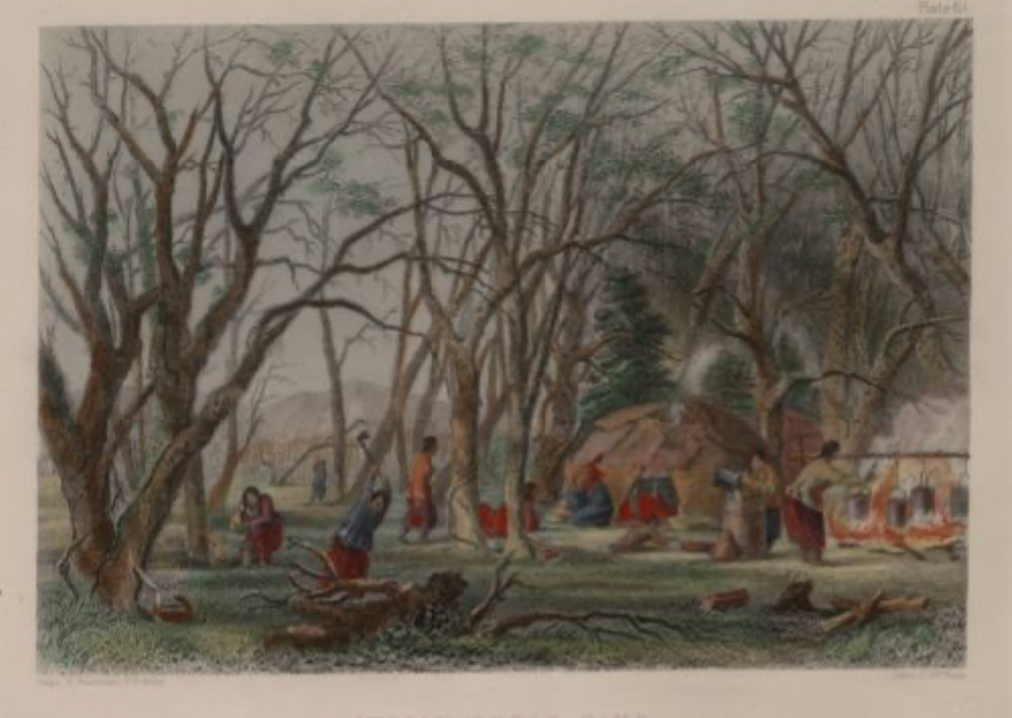
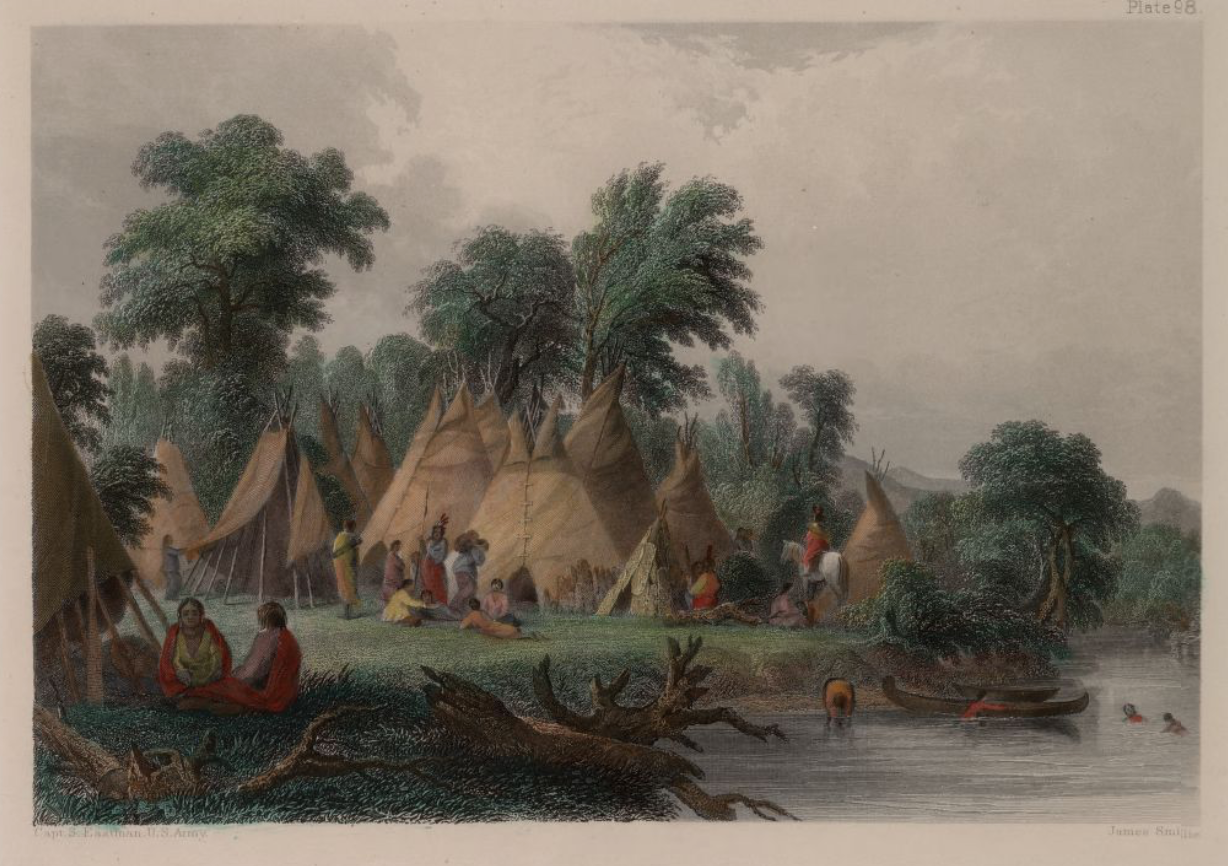
Seth Eastman paintings – Indian Sugar Camp and Dakota Encampment
The women and children along with the older men, collected fallen branches for firewood. The young men were tasked with using bows and arrows to hunt for food which included deer, moose, elk and sometimes bison. These tribal customs and routines were practiced year after year, for centuries. Everyone played a role in the survival of the Dakota family. The flow of life for them was like a song.
In the late spring, the Dakota gathered at their summer places, close to where they would plant their gardens. Thus, they chose areas of soft, sandy ground close to water. Here they built large semi-permanent houses made from poles and bark and returned to these structures year after year. The Dakota moved as the weather dictated. This movement may have been interpreted as ‘just passing through,’ but the changing of homesites was the Dakota way, differing from how modern-day Americans define home. To them all of the land, including hunting grounds, was their home.’
from Marcia Brakke’s book, Delano on the Crow: 150 Years of Unrivaled Spirit
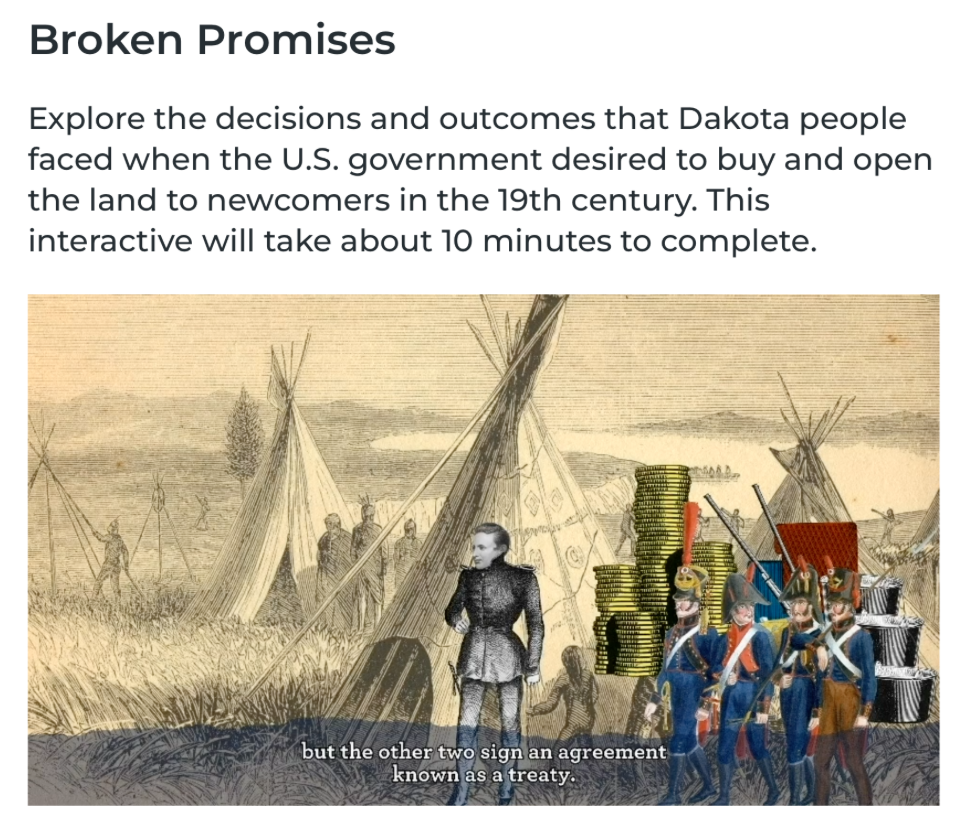
There are numerous resources to learn more about the Dakota people. Two of the best are Hoċokata Ṫi Cultural Center in Shakopee and the Minnesota Historical Society in St. Paul. Below is a remarkable interactive video that focuses on “westward expansion” and the treaties made (and broken) with Dakota people.
The content of this page is brought to you by the Delano Spirit of Community Trail Committee in honor of Delano's 150th Anniversary.